

Key Takeaways
Good mirror setup is a small adjustment that makes every drive calmer. Inspect the glass, housing, wiring, and fitment as separate parts before deciding whether to repair or replace anything.
- Set each mirror to reduce overlap with the vehicle while keeping a useful view of nearby traffic.
- Confirm folding, heating, cameras, indicators, and power adjustment before ordering a replacement.
- Match the left or right side, model year, trim, and installed features carefully.
- Use gentle cleaning methods and avoid forcing frozen or electrically stuck parts.
- Treat camera-based upgrades as compatibility projects, not simple cosmetic changes.
Understanding Tesla Model Y side mirrors
Tesla Model Y side mirrors combine familiar visibility equipment with electrically controlled functions and, on some configurations, additional built-in features. Their shape, wiring, and feature set can vary, so a mirror that looks correct may still be the wrong part. Start by identifying what is physically installed on the vehicle rather than relying on a listing photograph. That simple check prevents many mismatched orders.
Mirror design and core functions
The mirror assembly includes the reflective glass, backing plate, outer housing, folding mechanism, mounting point, and electrical connections. Depending on configuration, it may also include heating, an indicator, a camera, or auto-dimming glass. Each part has a different failure pattern: cracked glass does not necessarily mean the entire assembly is damaged, while a bent mount can affect more than the reflection.
A clean, stable reflection is the basic test. Look for looseness, rattling, hazing, chips, or a housing gap after a minor impact. Visibility comes before appearance, even when the housing has only a small scuff.
Differences across model years and trims
Model year and trim can change the available equipment and the wiring arrangement behind the mirror. Some assemblies may be sold with premium features, while another vehicle may use a simpler configuration. Do not assume that a later-looking cap or a similar connector guarantees compatibility.
Before shopping, record the vehicle year, market, side, existing functions, and part information visible on the old assembly. Photos of the connector and the back of the glass can be more useful than a general description.
Driver-side and passenger-side visibility
The two sides are not interchangeable. The driver-side mirror usually gives a more direct view of adjacent traffic, while the passenger-side mirror often requires a slightly different angle because of seating position and door geometry. Both should show a narrow reference to the vehicle without allowing the body to dominate the frame.
Adjust the mirrors while seated in your normal driving position. If you must lean forward or twist your shoulders to see the correct area, the setting is not practical for everyday use.
How side mirrors support Tesla’s driver-assistance features
Mirrors remain a visual aid even when the vehicle has cameras and driver-assistance displays. They help the driver cross-check nearby vehicles, cyclists, and lane movement, particularly when the road view is busy or conditions are changing. A damaged or poorly aimed mirror should not be treated as harmless because other sensors are present.
The mirror itself does not replace attentive driving. Use its view as one part of a broader observation routine, and respond to what you can actually see rather than assuming an electronic feature has detected everything.
How to adjust Tesla Model Y side mirrors correctly
Correct adjustment begins with the driver’s seat, not the mirror. Sit as you would on a normal trip, set the seat and steering wheel, and only then adjust the glass. Small changes can make a noticeable difference in how quickly a vehicle leaves the mirror view and enters your peripheral vision.
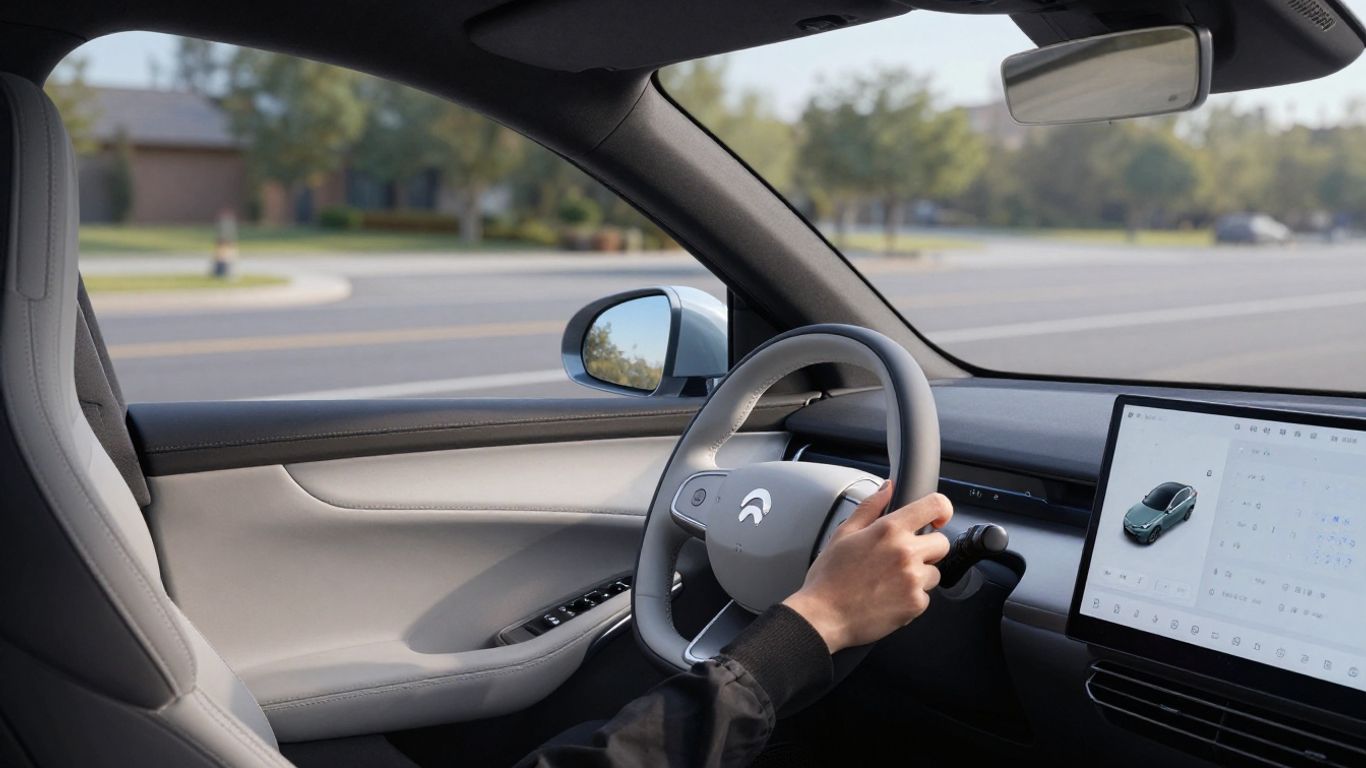
Using the touchscreen and steering-wheel controls
Mirror adjustment is generally selected through the vehicle’s touchscreen, with the steering-wheel controls used to move the selected mirror. Choose the side you want to change, make small inputs, and pause between movements so the reflection settles. If nothing moves, check whether the correct side is selected before assuming the motor has failed.
Avoid holding a control continuously against its travel limit. Repeatedly forcing a stalled mechanism can turn a minor control problem into a mechanical one.
Setting the ideal viewing angle
Set the inside edge so only a slim portion of the vehicle is visible. The remaining glass should cover the adjacent lane and the area behind it. The horizon should sit in a comfortable position rather than at the extreme top or bottom of the glass.
After setting both sides, glance from the road ahead to the mirrors without moving your head excessively. The transition between views should feel predictable. If a large area disappears between the mirror and your peripheral vision, adjust again rather than accepting the blind spot.
Adjusting mirrors for highway and city driving
Highway driving rewards a wider view of the neighboring lane, while city driving demands awareness of vehicles, bicycles, and objects close to the doors. The basic position should remain safe for both environments; avoid making a dramatic change every time the route changes. Instead, use a brief visual check before moving off.
A useful practice is to confirm the far edge of the neighboring lane, then check the area nearest the rear door. This creates a repeatable scan instead of relying on one glance at a single point.
Saving mirror positions for different drivers
If the vehicle supports driver profiles, save the mirror position after the seat and steering wheel are correctly set. Have each driver sit naturally before storing a profile, since an adjustment made from an unusual posture will not translate well later. Test the recalled position in a stationary vehicle.
Use profiles for genuine differences in seating position, not as a substitute for checking the mirror after someone has manually moved it. A profile can restore a setting, but it cannot correct a loose glass panel or a damaged actuator.
Common Tesla Model Y side mirror problems
Mirror complaints often sound alike but have different causes. A glass panel that will not adjust, a housing that will not fold, and a camera warning may involve separate components. Note when the problem occurs, whether it affects one side or both, and whether it began after weather exposure or an impact.
Mirror movement and adjustment failures
If one mirror moves in only one direction, moves slowly, or stops completely, listen for the motor and watch for any mechanical response. A silent control can point toward a switch, connector, fuse, or power issue, while a clicking sound may suggest a stripped gear or obstructed mechanism. Do not pry the glass to test movement unless the correct removal method is known.
Compare the affected side with the working side using the same control sequence. That comparison helps separate a vehicle-side control problem from a fault inside the assembly.
Folding, unfolding, and power-folding issues
A folding mirror can be blocked by ice, grit, a displaced cap, or impact damage. Clear visible obstruction first and allow frozen moisture to thaw naturally. If the mirror stops partway or folds unevenly, repeated commands may increase stress on the mechanism.
The folding position also matters in tight parking spaces. Check that the housing clears nearby objects before activating the function, and do not push an electrically operated mirror through resistance.
Blind spots, vibration, and distorted reflections
A wide blind spot may come from incorrect adjustment, a replacement glass panel with a different curvature, or a mirror housing that no longer sits squarely on the door. Vibration at speed can indicate loose fasteners, damaged mounting points, or a backing plate that is not seated correctly. Distortion across the entire panel is a reason to question the glass itself.
Make a stationary inspection before blaming road conditions. Compare reflections along the edge of the glass, then check whether the housing moves when the door is gently closed.
Camera, heating, and indicator-related concerns
A camera warning, failed heating, or missing indicator function should be documented separately from a cracked mirror. These features may have their own wiring and connectors, and a replacement assembly must support the functions already installed. Moisture inside the housing is another clue that inspection should happen before parts are ordered.
For a replacement with heated glass, power adjustment, auto-dimming, and integrated turn signals, verify the vehicle configuration rather than relying on a generic title. A right-hand OEM mirror assembly listing is useful as a reference for the features that must be checked, not as proof that every vehicle uses that part.
Cleaning and protecting the mirror assemblies
Clean mirrors are easier to adjust and easier to trust in rain or low light. Road film can create glare, while dried mineral deposits can make a clear panel look permanently damaged. Work gently around the housing seams, indicator, and any camera opening.
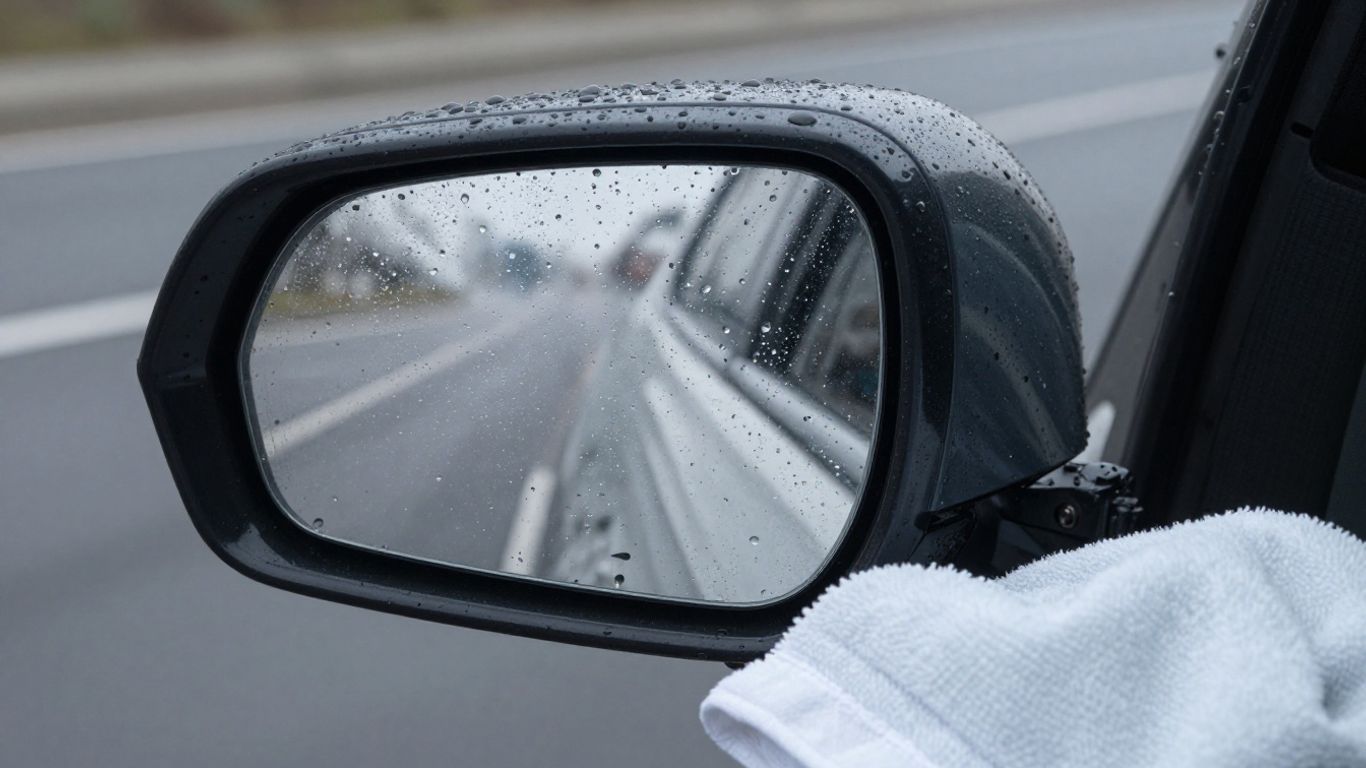
Safe methods for removing dirt and road film
Rinse loose grit away before wiping. Use a clean microfiber cloth and a mild automotive-safe cleaning solution, working from the top down. A separate cloth for the glass and housing reduces the chance of dragging paint or road grit across the reflective surface.
Never use a dry, dirty towel to remove stubborn film. If residue remains, soften it with cleaner and several light passes rather than increasing pressure.
Preventing water spots and winter ice buildup
Dry the glass after washing, especially when the vehicle will sit in direct sun. Water spots are easier to prevent than to remove once minerals have bonded to the surface. In winter, allow ice to soften with the vehicle’s normal heating process or a suitable de-icer.
Do not pour hot water over cold mirror glass, and do not operate the folding mechanism while ice holds the housing in place. Patience is cheaper than a broken actuator or cracked panel.
Using clear bra wraps and protective films
Clear protective film can help shield painted housings from chips and road debris, but it must be cut for the exact mirror shape and installed on a clean, dry surface. Edges that lift can collect dirt and moisture. Follow the film maker’s preparation and curing instructions instead of stretching the material aggressively.
For a film designed around the 2020–2024 range, review the stated fitment and installation requirements before purchase. This clear bra mirror wrap is a useful example of why model-year coverage and installation patience belong in the comparison.
Avoiding damage to glass, housing, and sensors
Keep abrasive polish, strong solvents, and sharp tools away from the glass and painted shell. A camera opening should be cleaned with the same care as a lens, without flooding the surrounding seam. If a cap is loose or a sensor area has shifted, repair the underlying problem rather than covering it with film.
For perspective, even an unrelated smart thermostat upgrade is evaluated by fit, installation method, and configuration; mirror protection deserves the same practical discipline. The product category is different, but the checking habit is useful.
Choosing replacement Tesla Model Y side mirrors
Replacement shopping is easiest when treated as a specification exercise. Identify the damaged component first, then match the side and installed functions. Price matters, but a cheaper part that loses heating, camera support, or correct wiring can create a second repair.
When to replace the glass versus the full assembly
Replace only the glass when the housing, folding mechanism, backing plate, and wiring remain sound and the damage is limited to the reflective panel. A full assembly becomes more appropriate when the mount is bent, the actuator is damaged, the cap is split, or several electrical functions have failed.
A loose glass panel deserves careful inspection before replacement. The cause may be a failed clip or backing plate rather than a problem with the door mirror body.
Comparing OEM and aftermarket mirror components
OEM components are usually selected to preserve the original configuration, while aftermarket parts vary considerably in glass shape, finish, connectors, and included features. Read the actual contents of the package: some listings describe a complete assembly, while others provide only glass or a cap.
A wide-angle replacement may alter the apparent size and distance of vehicles. For example, SUMA Mirrors describes a wide-angle convex design and fitment claims, but those claims should still be checked against the exact vehicle and desired wiring arrangement.
Checking left-hand and right-hand compatibility
Side designation is non-negotiable. Confirm whether the listing uses driver/passenger terminology, left-hand/right-hand terminology, or a market-specific convention. Check the connector orientation and the shape of the mounting base as well.
Before ordering, compare these details:
- Driver-side or passenger-side designation
- Glass shape and curvature
- Connector style and wire count
- Heating, indicator, camera, and dimming equipment
This short comparison catches errors that a color or photograph alone cannot reveal. Keep the old part until the new one has been inspected and confirmed.
Verifying fitment by model year and configuration
Fitment should be verified by model year, market, trim, and equipment. Ask the seller for confirmation when a listing uses broad language such as “fits Model Y” without specifying the installed features. A part number, connector photograph, or vehicle identification check is stronger evidence than a generic compatibility badge.
If appearance is the main concern, compare the cap and glass finish separately from the electrical specification. Cosmetic similarity is not functional compatibility.
Tesla Model Y side mirror repair and replacement process
A door-mirror replacement is a compact job with several ways to cause collateral damage. The door trim, wiring, clips, fasteners, and glass run area may all be involved. Gather the correct trim tools and documentation before removing anything, and protect the door paint around the work area.
Diagnosing damage before ordering parts
Begin with photographs of the mirror from several angles. Test adjustment, folding, heating, indicator operation, and any camera function that was working before the incident. Record warning messages and listen for unusual motor sounds.
The goal is to distinguish impact damage from an electrical or control issue. Ordering a full assembly for a loose connector wastes money, while ordering glass for a bent mount leaves the real problem untouched.
Removing and installing a door mirror assembly
Removing the assembly generally involves access behind the front door trim, disconnecting the electrical connector, releasing nearby harness or seal clips, and removing the mounting fasteners. Protect the door and support the mirror as the last fastener comes out. Installation is the reverse, followed by a careful function check.
Use the vehicle-specific service procedure for exact fastener details. A door mirror installation guide highlights the need for hand tools, careful clip release, and correct reassembly practices; those details matter more than speed.
Handling wiring, connectors, and built-in features
Never pull on wires to release a connector, and compare the new connector with the old one before routing anything. Keep wiring away from moving joints and make sure seals return to their original position. A mirror can look correctly installed while a pin is only partly seated.
After installation, test each fitted function separately. Check adjustment, folding, heating, indicators, camera views, and warning messages before reinstalling every trim piece.
A video can help with the order of operations, but it should supplement—not replace—the procedure for the specific vehicle configuration. If the video shows a different door panel or connector, stop and verify the difference.
When professional service is the safer option
Professional service is sensible when the door trim is unfamiliar, the mirror includes several integrated features, or the vehicle has an unresolved warning after installation. It is also the safer choice when the housing or mounting area has structural damage. A rushed repair can create wind noise, water entry, loose trim, or unreliable electrical operation.
Ask what part is being installed and whether the technician will test every original function. Clear documentation makes future repairs easier.
Upgrading Tesla Model Y side mirrors
An upgrade should solve a defined visibility or protection problem. Some changes affect only appearance, while others alter the glass, camera view, wiring, or software relationship between components. Decide what improvement you actually need before comparing promotional photographs.
Evaluating camera-based rear-view mirror upgrades
A camera-based rear-view mirror uses a display and camera feed rather than relying solely on a conventional reflection. That can change the view available when passengers or cargo obstruct the rear window, but it also introduces camera placement, power, display brightness, and weather considerations.
The E-Mirror concept describes switching between a traditional mirror and a wide camera view, with additional recording functions. Treat development status and vehicle compatibility as central questions before considering installation.
Considering blind-spot visibility improvements
Blind-spot improvements may come from a different glass curvature, a revised adjustment position, or an additional camera-based view. Each option changes how distance and speed are perceived. Test the view in a controlled setting before relying on it in dense traffic.
Do not assume a wider image removes the need for a shoulder check. Better coverage can support observation, but it does not eliminate areas that change with vehicle position.
Comparing appearance, functionality, and installation effort
A painted cap may provide the desired look with little electrical work, while replacement glass changes the view but may require careful fitting. A camera system typically involves more components and a more involved installation. Compare the benefit against maintenance, weather exposure, and the possibility of future troubleshooting.
Some product research is best kept separate from the vehicle decision. For instance, The Drip Bros describes interchangeable clip-on number pendants, a modular accessory idea unrelated to mirror function but illustrative of why a change should be judged by its actual use rather than appearance alone. For a vehicle upgrade, keep the comparison focused on visibility, fit, and reliability.
Understanding warranty and compliance considerations
Before modifying a mirror, check the supplier’s warranty terms, the vehicle warranty implications, and any local requirements affecting lighting or visibility equipment. Changes to wiring can complicate later diagnosis. Keep the original parts and installation records in case the upgrade must be reversed.
The same caution applies to unrelated purchases such as luxury printed packaging: stated materials and intended use should be checked rather than inferred from presentation. Here, the relevant questions are whether the mirror remains secure, preserves required functions, and can be serviced safely.
Conclusion
The best approach to Tesla Model Y side mirrors is methodical rather than dramatic: set them carefully, keep them clean, diagnose the failed component, and verify every fitment detail before replacing or upgrading anything. A mirror that is stable, clear, correctly wired, and suited to the vehicle’s configuration will do more for confidence than an attractive part chosen in haste.
Frequently Asked Questions
How often should side mirrors be cleaned?
Clean them whenever road film, salt, or dried water reduces clarity, and dry the glass after washing to limit water spots.
Should the vehicle body be visible in the mirror?
A narrow strip of the vehicle can help orient the view, but most of the glass should show the adjacent lane and area behind the vehicle.
Can cracked mirror glass be replaced separately?
Often, glass can be replaced separately when the housing, backing plate, mount, and electrical functions remain undamaged. Confirm the exact design before ordering.
Why does a power-folding mirror stop halfway?
Possible causes include ice, grit, impact damage, a displaced housing, or a failing actuator. Remove only obvious obstructions and avoid forcing the mechanism.
How can a blind spot be reduced?
Start with correct seat and mirror adjustment. Alternative glass or camera-based systems may widen the view, but they do not remove the need for attentive scanning.
Is aftermarket mirror glass safe to use?
It can be suitable when its curvature, fit, mounting method, and required features are verified. Poorly matched glass may distort distance or vibrate at speed.
When should a mirror repair be handled by a professional?
Choose professional help when wiring, cameras, door trim, structural mounts, or unresolved warnings are involved, or whenever the correct removal procedure is uncertain.