

Key Takeaways
The right floor liners start with your Model X’s exact year and seating layout, then come down to coverage, fit, and practical upkeep.
- Match the liner set to your vehicle’s year and seating configuration.
- Compare materials by feel, cleanup, weight, and your local weather.
- Check edge height and coverage around the footwells and cargo areas.
- Confirm retention and make sure the driver’s liner stays clear of the pedals.
- Review the set contents, return terms, and warranty before ordering.
Check compatibility with your Model X
A liner can look close in a product photo and still miss the shape or coverage your vehicle needs. Start with the Model X’s model year and seating arrangement, then check the seller’s fitment notes against your vehicle. This simple check helps narrow the options before you compare materials or price.
Match the model year and vehicle generation
Check the year range stated for the liner, rather than assuming a set fits every Model X. A change in the vehicle’s floor shape or interior can affect how a liner sits, even when the model name remains the same. If the listing uses broad year ranges, look for a fitment chart or ask the seller to confirm your exact year.
Confirm the seating configuration and row coverage
The number of seats and the arrangement of the rows affect which pieces belong in a set. A listing for a six-seat vehicle, for example, may not be the right match for another seating layout. Confirm which rows are covered and whether the package includes the pieces you need; a six-seat TPE floor-mat listing is one example of why configuration details matter.
Check whether liners are designed for your trim
Some listings specify a trim or interior configuration, while others state that a set fits several versions. Do not infer compatibility from a product photo or a general Model X label. Read the exclusions as carefully as the fit claims, and ask the seller if your trim is not named.
Verify fitment details before ordering
Before checkout, compare the product listing with your vehicle details and note any stated exclusions. It helps to keep a short record of the points that need confirmation:
- Model year and any generation noted in the listing.
- Number of seats and the row layout.
- Included rows and any trim-specific restrictions.
- Whether cargo or trunk pieces are part of the set.
If one of these details is unclear, pause and get an answer from the seller rather than relying on an assumption. That small check can save the inconvenience of unpacking a set that does not match your cabin.
Compare floor liner materials
Material affects how a liner feels underfoot and how it behaves when rain, grit, or spills make their way into the cabin. Product labels can be useful, but they do not tell the whole story: surface texture, weight, and care instructions matter too. Think about the conditions the vehicle sees most often, then compare the material options against that routine.
TPE for flexible, all-weather protection
TPE is commonly selected for liners intended to handle wet or dirty conditions, but individual products can differ in thickness, flexibility, and finish. Check the listing for care guidance and the conditions the manufacturer describes it for. A TPE label alone does not establish the exact coverage or fit, so verify those details separately.
Rubber for a durable, grippy surface
Rubber liners may appeal if you prefer a substantial surface with a planted feel. Their weight and texture vary, so inspect product details rather than assuming all rubber mats feel alike. If you frequently remove liners for cleaning, consider whether the weight will be manageable for you.
Carpet for a softer, factory-style feel
Carpet can offer a softer surface that blends with a cabin’s interior, though it may call for more attention after wet or muddy trips. Compare the pile and backing, and look for the manufacturer’s cleaning directions before buying. Carpet is a comfort and appearance choice as much as a practical one, so weigh the feel against the conditions you encounter.
Consider odor, weight, and material claims
Material descriptions are most useful when they give specific, checkable details. Look for care instructions, product weight where provided, and any claims about odor or composition, then consider whether those details matter in your situation. This quick comparison can help turn broad material labels into a more useful decision:
| Material | What to compare | Practical question |
|---|---|---|
| TPE | Flexibility, thickness, and care | Will it suit the weather and cleanup routine? |
| Rubber | Weight, grip, and surface texture | Will it be easy to remove and reinstall? |
| Carpet | Pile, backing, and cleaning guidance | Does the softer feel suit your usual conditions? |
Use the table as a starting point, not a substitute for checking the product’s own specifications. The exact product details matter more than a material name on its own, especially when odor, weight, or cleaning is a deciding factor.
Evaluate coverage and design
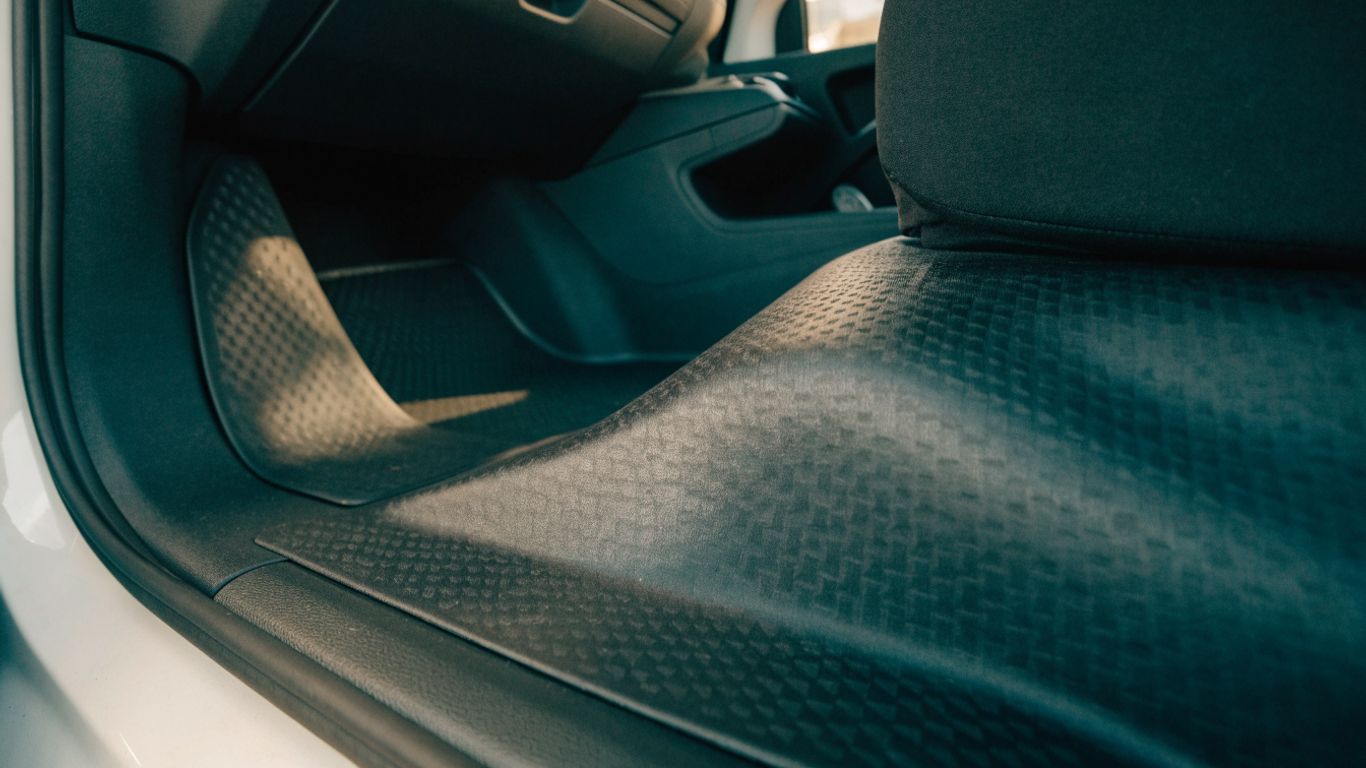
Good coverage is about more than the outline of the footwell. Raised edges, surface texture, and the areas around footrests and door openings all affect how a liner works in everyday use. Consider what tends to enter your vehicle—water, dust, sand, or food—and look for product details that address those places directly.
Look for raised edges to contain spills
Raised edges can help keep loose debris and small spills on the liner instead of letting them spread across the surrounding carpet. Compare the height and shape of the edges in product photos, and check whether the listing describes where the edges run. No edge design can contain every spill, so treat this feature as a helpful part of coverage rather than a guarantee.
Check coverage around the footrests and door sills
Look beyond the central area where the driver and passengers place their feet. Check whether the liner reaches around the footrest and whether the outer edges cover the areas near the doors. Product images can help, but a fitment diagram or written coverage description is more useful when it is available.
Choose a surface texture that suits your climate
A textured surface may help catch dirt and give shoes a different feel underfoot, while grooves can influence how water and debris sit on the liner. Think about what you track in most often and how easily you want to brush or rinse the surface. Texture is a matter of preference, but it should still be straightforward to clean.
Decide whether trunk or cargo liners are also needed
Floor liners and cargo liners are often sold separately or in different package combinations. Decide whether you want to protect only the passenger footwells or also the front and rear storage areas. Check the stated cargo-floor configuration carefully; a listing may specify exclusions that are easy to miss if you focus only on the cabin mats.
Review fit, retention, and installation
A liner should sit in its intended position without bunching or shifting during normal use. Custom-shaped and universal options differ in how closely they follow the vehicle’s floor, but the product description and retention method matter more than the label alone. Before installing anything, read the instructions and check the driver’s area with particular care.
Compare custom-molded and universal liners
Custom-molded liners are described as shaped for a particular vehicle, while universal liners are made to suit a broader range of interiors. A vehicle-specific description can be a useful starting point, not proof of a perfect fit. Check the year and seating configuration, then compare the product’s shape and coverage details with your own vehicle.
Check for secure anchors and anti-slip backing
Look for information about the retention points or backing, and confirm that any listed anchors correspond to your vehicle. A liner that sits flat and remains in position is easier to live with than one that needs frequent adjustment. Follow the supplied fitment information rather than adding fasteners or changing the liner yourself.
Make sure the driver’s liner cannot interfere with the pedals
The driver’s liner must not obstruct the accelerator, brake, or their movement. After installation, check that it lies flat, is secured as directed, and remains clear of the pedals through their full travel. If it shifts or catches, remove it and resolve the fit before driving.
Follow the manufacturer’s installation instructions
Installation can vary from one liner to another, so use the instructions supplied with the set. A careful check of the floor area and retention points can make the process more straightforward. This video placeholder marks a general visual reference; rely on the instructions for the particular liner you purchase.
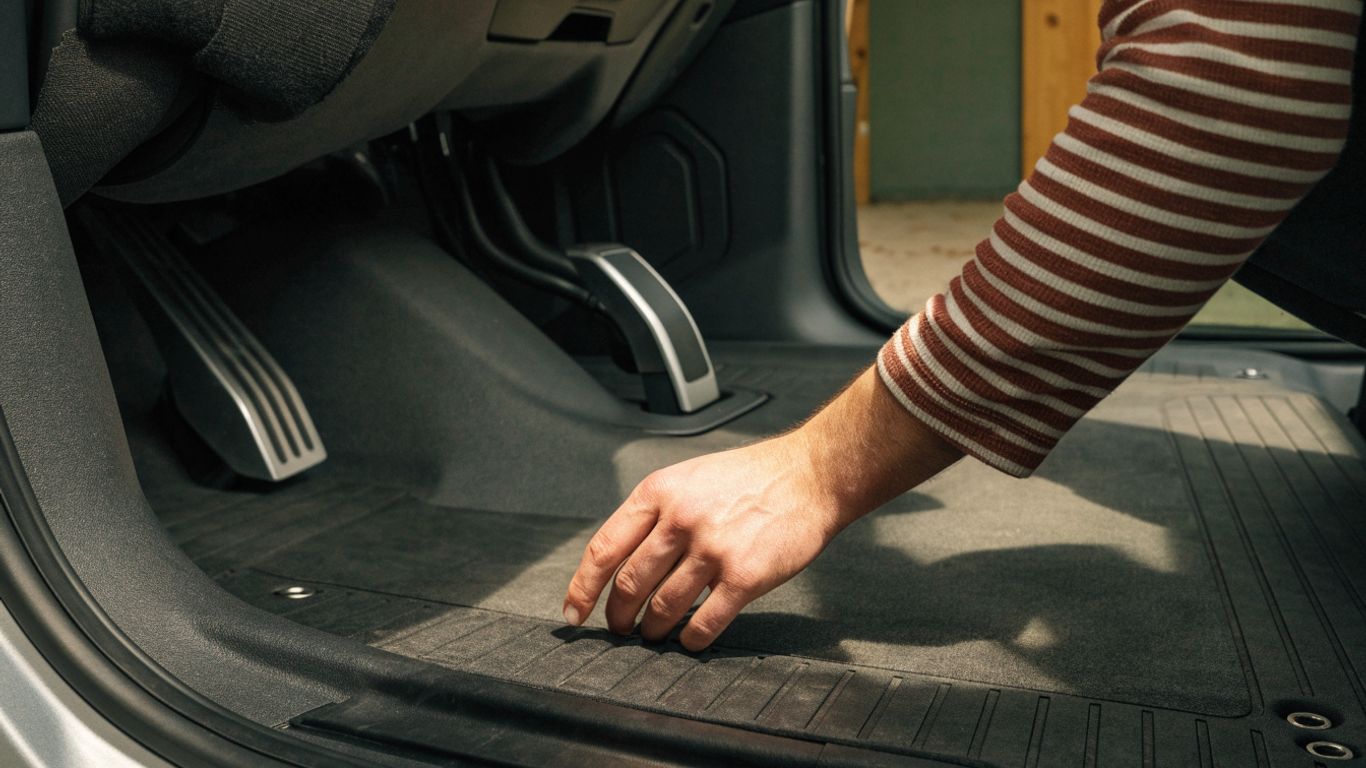
Once the liner is installed, check that it lies flat and that any anchors are engaged as directed. If its position is uncertain, stop and contact the seller or manufacturer for guidance before using the vehicle.
Clean and maintain your floor liners
Regular cleaning helps keep grit and grime from building up, and it gives you a chance to notice if a liner has shifted or become damaged. The right method depends on the material, so check the care instructions before using water or a cleaning product. A simple routine is usually easier to keep up with than waiting until dirt has accumulated.
Remove and shake out loose debris
Take the liners out carefully and shake loose dirt away from the vehicle. Avoid dragging a dirty liner across the cabin carpet, since grit can fall back into the footwell. A quick shake between more thorough washes can make routine upkeep less of a chore.
Wash off mud, salt, and spills
Use the cleaning method recommended for the material, and rinse away grit or dried mud without scrubbing with anything abrasive. Salt and sticky spills are easier to deal with before they have been left to settle. If a product’s care instructions are unclear, check with the manufacturer instead of guessing at a cleaner.
Dry liners fully before reinstalling them
Let the liners dry fully before putting them back in the vehicle. Reinstalling damp liners can leave moisture where you would rather not have it, and a wet surface may be slippery. Check both sides and the backing, then reinstall only when everything is dry.
Avoid cleaners that can damage the material
Strong solvents, abrasive tools, or unapproved treatments may affect a liner’s surface or backing. Start with the manufacturer’s recommended method and use a mild approach unless the care instructions say otherwise. If you are unsure about a cleaner, test neither it nor a coating on the liner; ask for product-specific guidance first.
Choose a set that fits your needs and budget
A lower price is not the whole cost of ownership if the set omits a row you need or turns out to be a poor fit. Compare the pieces included, the seller’s fitment information, and the terms that apply if the set is not right. Keep your requirements in view while reading reviews, since another owner’s vehicle details may differ from yours.
Compare included rows and accessories
Read the package contents closely and check which rows are included. Some sets may offer additional cargo pieces or accessories, but those can vary by configuration. A Model X floor-mat listing from T Sportline is a separate source to consult when comparing what sellers list; verify its stated coverage and fitment directly before ordering.
Weigh price against fit and warranty coverage
Compare the price with the pieces in the set and the stated warranty, not just the headline cost. A warranty’s duration and coverage are only useful if you understand what it applies to and what is excluded. One way to broaden a comparison is to review all-weather Model X mat options, while still checking each listing against your own seating layout.
Read reviews for long-term wear and fit issues
Reviews can reveal recurring concerns about fit, wear, or cleaning, but look for comments from owners with a similar vehicle year and seating arrangement. Treat individual experiences as useful context rather than a promise of the same result. Keep research focused on fitment: unrelated pages about GoldSignals.io, youth fundraiser partners, Falco Firearms privacy, pre-workout supplements, and Google Business Profile management cannot confirm whether a floor liner suits your Model X.
Check the return policy and warranty terms
Before placing an order, note the return window, any conditions on returns, and how the seller handles warranty claims. Make sure you know whether the set can be returned after inspection or installation, since policies differ. A few minutes spent reading the terms can help you make a more informed choice between similar-looking sets.
Conclusion
Choosing Tesla Model X floor liners is mostly a matter of careful matching: confirm your year and seating layout, compare materials and coverage, and check fit and retention before driving. Then weigh the included pieces, care requirements, return terms, and warranty against the way you use the vehicle. Those details make it easier to find a set that suits your cabin and your budget.
Frequently Asked Questions
Do floor liners fit every Model X year?
Not necessarily. Check the year range and any vehicle-generation details stated in the listing, and ask the seller if your exact year is not covered clearly.
Does seating configuration affect which liners I need?
Yes. Row layout and seat count can affect which pieces fit and which rows a set covers, so compare the listing with your vehicle before ordering.
Which material is best for wet or muddy conditions?
There is no single best choice for everyone. Compare the material, surface design, care instructions, and product-specific conditions described by the manufacturer.
Are raised edges useful on floor liners?
They can help keep some dirt and small spills on the liner, but coverage varies and edges cannot prevent every mess from spreading.
Can I use a universal liner in a Model X?
A universal liner may be intended for a range of vehicles, but fit can vary. Check its dimensions and placement, and make sure it does not interfere with the pedals.
How often should I clean my floor liners?
Clean them when dirt or spills build up, and remove loose debris as needed. The appropriate cleaning method depends on the material and its care instructions.
Should trunk liners be purchased with floor liners?
That depends on whether you want to protect the cargo areas as well as the passenger footwells. Check which trunk or cargo pieces are included and whether they match your floor configuration.