

Key Takeaways
A good frunk mat should match your car’s configuration and the way you use the front trunk. Check fit, material, coverage, and the seller’s terms before buying.
- Confirm the Model S year and body configuration before choosing a mat.
- Compare material options for care, flexibility, and storage needs.
- Look for coverage and edges that suit the cargo you carry.
- Check that the mat sits flat and leaves the latch and drainage points clear.
- Weigh the price against fit information, return terms, and owner feedback.
1. Confirm fit for your Model S
A frunk mat only helps if it matches the shape of the space it is meant to cover. Model year and body configuration can affect that shape, so don’t rely on a broad “fits Model S” label alone. Before ordering a tesla model s frunk mat, compare the seller’s fit details with your vehicle and check what is included in the listing.
Check the model year and body configuration
Start with the vehicle’s model year and configuration, then compare those details with the seller’s compatibility notes. If a listing offers multiple fit options, select the one that matches your car rather than assuming the newest or most common option will work. For example, OMAC Proline is listed as a TPE front trunk mat for the Model S; check the specific fit information on the listing before ordering.
Compare mat dimensions with the frunk floor
When dimensions are available, compare them with the usable floor area rather than relying on a product photo for scale. Note the width at the narrowest point, the distance around any contours, and whether the mat is intended to cover only the floor or also extend up the sides. A few minutes with a tape measure can help flag a mismatch before the package arrives.
Look for a Model S-specific fit rather than a universal liner
A vehicle-specific listing should identify which Model S configuration it fits and show enough detail to distinguish it from a universal liner. Check product photos for the outline, corners, and any molded contours that correspond to the frunk. If the description is vague, ask the seller to confirm fitment in writing before you buy.
2. Choose a material for your needs
Material affects more than appearance: it changes how a mat feels to handle, how it responds to dirt and moisture, and how easily it can be stored. The right choice depends on what you carry and how often you expect to remove the liner for cleaning. Consider the trade-offs rather than assuming one material is best for every owner.
Compare TPE, rubber, and carpet options
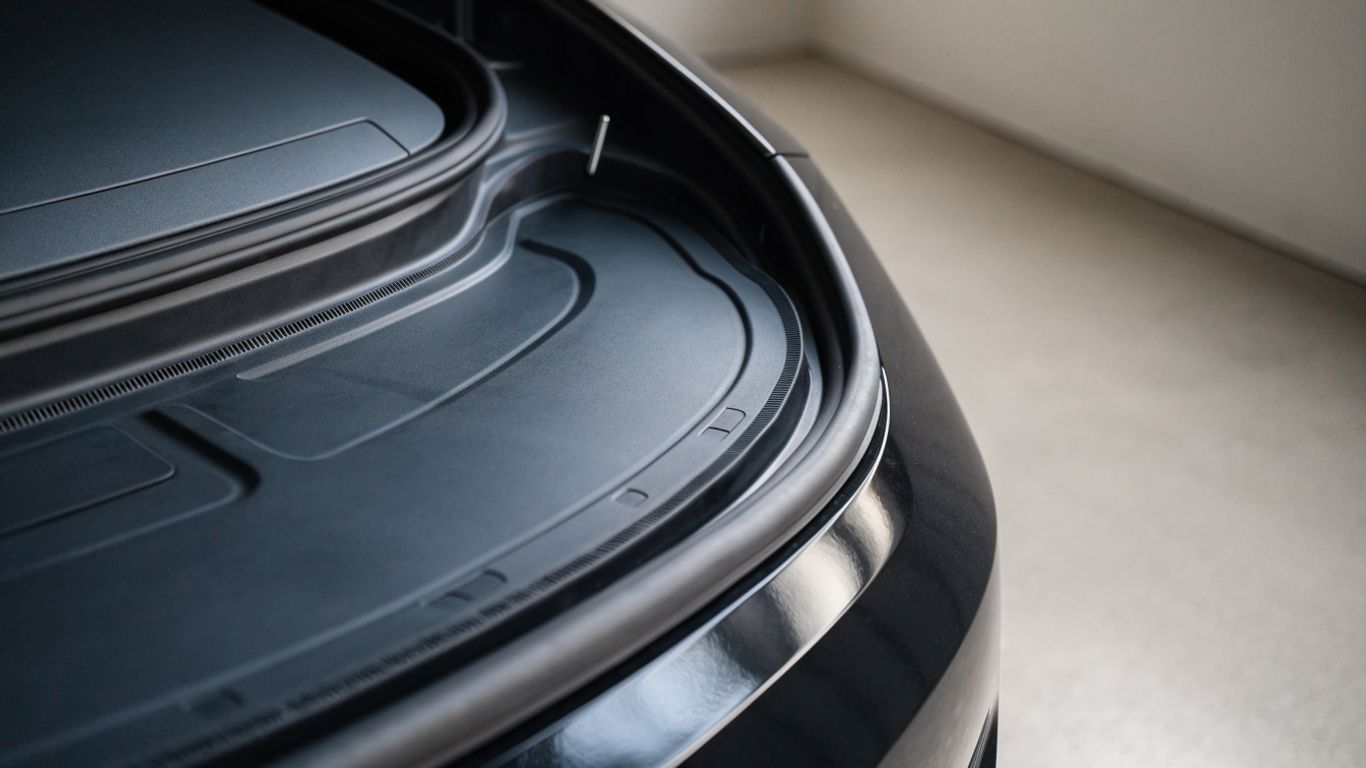
Product descriptions often group mats by material, but the names alone don’t tell you everything about their feel or upkeep. Use the listed construction, care guidance, and coverage details to make a like-for-like comparison. This table gives you a starting point; the specific product’s description should settle any questions about its material.
| Material label | Points to compare | A useful question |
|---|---|---|
| TPE | Flexibility and stated care instructions | Can it be lifted and rinsed as needed? |
| Rubber | Thickness, weight, and surface texture | Will it be manageable to remove and store? |
| Carpet | Pile, backing, and cleaning guidance | Does the care routine suit the cargo you carry? |
| Mixed or layered | Each layer’s purpose and care needs | Are the materials and cleaning steps clearly described? |
Treat these as prompts for checking the listing, not guarantees about every mat in a material category. If a product page doesn’t identify construction or care instructions clearly, ask before ordering rather than guessing from the label.
Consider odor, flexibility, and temperature resistance
If you are sensitive to new-product odors, look for material details and owner comments that specifically discuss smell after unpacking. Flexibility matters when lifting the mat out to clean or store it, while temperature guidance can help you understand how the seller expects it to be used. Avoid inferring performance from a material name alone; check the product’s own care and use notes.
Balance durability with weight and storage
A heavier mat may feel substantial, but it can also be less convenient to lift out regularly. If you expect to remove it often, consider whether it can be folded, rolled, or stored without becoming awkward. The most practical choice is usually the one whose weight and care routine fit your habits, not simply the thickest option.
3. Assess coverage and protective features
Coverage determines which parts of the frunk floor are shielded from the items you carry. A mat that covers the center but leaves vulnerable edges exposed may not suit messy or irregular cargo. Read the description alongside the product photos, and consider how the features relate to your own routine.
Check coverage around the frunk floor and edges
Look closely at the mat’s outline and confirm whether it reaches the edges you want covered. Some descriptions distinguish a floor-only liner from one that extends around the perimeter, so check the stated coverage rather than assuming the shape from a single photograph. For a useful reference, OMAC Proline is described as a front trunk mat for the Model S; confirm its precise coverage details in the listing.
Look for raised sides to contain spills and debris
Raised sides can help keep loose debris or a small spill from reaching the surrounding area, but their height and shape matter. Check photos from more than one angle and see whether the product description explains the edge design. Think about the objects you carry: a low edge may be enough for dry shopping bags, while other cargo may call for more containment.
Consider texture and grip for shifting cargo
A textured surface may help cargo stay put, though the result depends on the item, its weight, and how it is loaded. Consider whether your usual bags or boxes have flat, stable bases, and avoid treating surface texture as a substitute for securing loose cargo. For longer or heavier loads, basic loading habits matter too; safe truck loading offers general advice on arranging and securing belongings during a move.
A few simple checks can make the coverage decision more concrete:
- Compare the mat outline with the full frunk floor, including corners.
- Check whether the edges are raised and how they follow the perimeter.
- Inspect the surface in photos for texture or a smooth finish.
- Match those details to the kinds of items you usually carry.
Use the list to narrow down the features that matter, then verify them in the actual product description. A mat’s advertised feature is useful only if it addresses a real need in your frunk.
4. Install the mat and check the fit
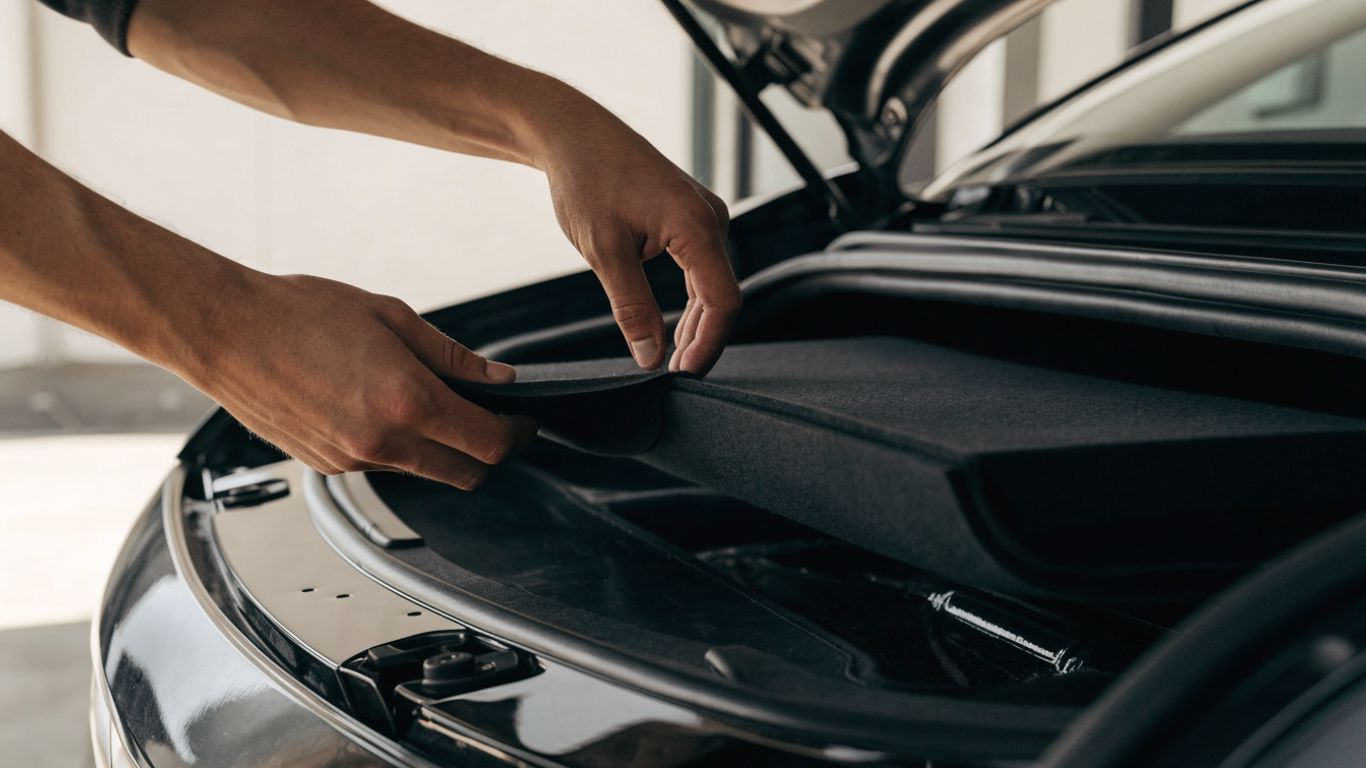
Installation is usually straightforward, but a quick inspection before and after placing the mat can catch problems early. A clean, empty frunk makes it easier to see whether the liner sits naturally against the floor. Take your time around moving or functional parts, and follow any instructions supplied with the mat.
Prepare the frunk before placing the mat
Remove loose items and brush away dirt so it won’t be trapped beneath the liner. If the floor is damp, let it dry before installation. Starting with a clean surface also makes it easier to notice whether the mat itself has dust, packaging residue, or an unexpected fold.
Align it without obstructing the latch or drainage points
Set the mat down gently and align its contours with the frunk floor. Check that it doesn’t cover the latch or any drainage points, and don’t force an edge into place if the liner seems too large or misshapen. If the supplied instructions identify specific alignment points, use those as your guide.
Recheck for curling, gaps, or interference
Once the mat is in place, inspect the perimeter for lifted corners, large gaps, or areas that buckle when pressed. Open and close the frunk as normal and make sure the liner doesn’t interfere with its operation. If a section keeps curling, remove the mat and check for a fold or fit mismatch rather than trimming it without the seller’s guidance.
5. Clean and maintain the mat
Regular care can help keep a liner usable without adding much effort. The right method depends on the material and the manufacturer’s instructions, so avoid assuming that every mat can be cleaned in the same way. A quick check of the care label or product page can prevent an avoidable mistake.
Remove loose dirt before washing
Lift out the mat and shake or brush off dry grit before using water. Removing loose particles first helps keep them from spreading across the liner while you wash it. For sticky or caked-on dirt, follow the product’s instructions rather than scraping aggressively at the surface.
Use cleaners suited to the mat material
Check the maker’s care guidance before applying soap, sprays, or other cleaners. A mild approach is often a sensible starting point, but the mat’s specific instructions take priority, especially for layered or carpeted materials. If you are unsure whether a cleaner is suitable, test it on a small, inconspicuous area first.
Dry it fully before reinstalling
After washing, allow the mat to dry completely on both sides before returning it to the frunk. Trapped moisture can leave the area damp, particularly when a liner sits flat against the floor. Don’t rush the process by reinstalling it while wet; wait until the surface and underside are dry to the touch.
6. Compare value before buying
Price is useful only when viewed alongside fit, material, coverage, and the seller’s terms. A lower-priced mat may still be a poor value if its compatibility details are unclear or it doesn’t cover the area you need. Take a moment to compare the whole offer, not just the number on the product page.
Review price alongside material and coverage
Compare products with similar fit claims and coverage before weighing their prices. Check what the listing says about construction, edges, and cleaning, then decide which features matter for your use. A clear description is more useful than a long feature list that leaves basic questions unanswered.
Check the return policy and warranty
Read the return conditions and warranty before placing an order, paying attention to fit-related exclusions and deadlines. If the product is made to a particular configuration, confirm how the seller handles a mismatch or manufacturing issue. Keep the order details and any fitment correspondence until you know the mat works for your car.
Read owner feedback for fit and long-term wear
Look for reviews that mention the same vehicle configuration and describe use over time, rather than relying only on first impressions. Comments about curling, cleaning, fit at the edges, or wear can help you form better questions for the seller. Treat individual reviews as one person’s experience, not a promise that every mat will perform identically.
Conclusion
Choosing a frunk mat comes down to matching the liner to your Model S, then checking that its material, coverage, care needs, and buying terms suit your routine. Measure and inspect before ordering, and take a moment to confirm the fit after installation. Those small checks can help you choose with fewer surprises.
Frequently Asked Questions
How do I know whether a frunk mat will fit my Model S?
Match the product’s compatibility details to your vehicle’s model year and configuration. Compare dimensions and photos with the frunk floor, and ask the seller to confirm if the listing is unclear.
Is TPE or rubber better for a frunk mat?
Neither is automatically better for every driver. Compare the specific mat’s construction, flexibility, weight, care instructions, and coverage with how you plan to use it.
Does a frunk mat need raised edges?
Raised edges can help contain some debris or spills, but their value depends on what you carry. Check the edge design and consider whether it suits your usual cargo.
Can I leave a frunk mat installed all the time?
That depends on the product and its care guidance. Make sure the mat fits securely, doesn’t obstruct functional parts, and is removed when needed for cleaning or inspection.
How should I clean a frunk mat?
Remove loose dirt first, then follow the manufacturer’s instructions for the material. Let the mat dry fully on both sides before reinstalling it.
What should I check after installing a new mat?
Look for curling, gaps, and buckled areas, and confirm the liner doesn’t interfere with the latch or drainage points. Check that the frunk operates normally with the mat in place.
What makes a frunk mat good value?
Consider fit certainty, coverage, material, care requirements, return terms, and warranty alongside the price. Owner reviews can add useful context, especially when they describe long-term use in a similar configuration.