

Key Takeaways
The best tesla all-weather floor mats are the ones that fit your exact vehicle and suit the messes you regularly bring inside.
- Confirm the Tesla model, model year, seating layout, and interior configuration before ordering.
- Choose raised edges and dependable anchoring if you regularly deal with rain, snow, mud, or salt.
- Check front, rear, trunk, frunk, seat-rail, and door-sill coverage rather than judging a set by its front mats alone.
- Favor materials that stay flexible, resist sliding, and clean without special treatment.
- Compare fit, coverage, warranty, returns, and replacement availability alongside the purchase price.
Why Tesla all-weather floor mats are worth considering
A vehicle’s floor takes more abuse than most interior surfaces. Shoes bring in water, grit, mud, and winter salt, while groceries, sports equipment, and pet hair create their own small disasters. A well-chosen liner gives that daily mess a defined, removable surface.
Protection from water, snow, mud, and road salt
Wet weather is where all-weather mats make their strongest case. Raised borders can keep slush and small spills from spreading immediately across the carpet, while a textured surface gives dirty footwear somewhere to settle. No mat can compensate for a poor fit or neglected overflow, but containing the mess makes cleanup far easier.
Salt deserves particular attention because it can leave a stubborn residue after the visible moisture disappears. Remove wet mats periodically, rinse away the residue, and let both the liner and the vehicle floor dry before reinstalling them.
Differences between carpet mats and all-weather liners
Carpet mats have a softer, more understated feel and can suit drivers who mostly encounter dry roads. They may also be easier to blend with a factory-style interior. All-weather liners generally trade that softness for a wipeable surface, molded edges, and better containment.
The choice is not simply seasonal. A family car, a vehicle used for outdoor hobbies, or a car parked outdoors may benefit from liners year-round, while a lightly used commuter may be perfectly served by carpet.
How floor mats help protect Tesla interiors
Floor mats reduce direct contact between shoes and the underlying carpet, limiting the spread of grit and moisture. They also create a removable layer beneath child seats, work boots, and everyday cargo. Fit matters more than decoration because a liner that curls, shifts, or leaves large exposed areas cannot protect consistently.
Protection still depends on sensible use. Inspect the edges, keep the accelerator and brake areas unobstructed, and remove anything that prevents the mat from lying flat.
When premium mats may be worth the investment
A higher price can make sense when it buys accurate shaping, fuller coverage, a stable backing, and materials that remain usable through repeated cleaning. It is less convincing when the extra cost is mainly a color or finish that does not improve daily function.
Think about replacement, too. A set that can be ordered by individual piece may be more practical than replacing an entire collection after one front mat wears out.
Match the mats to your Tesla model and configuration
Tesla interiors vary by model, seating arrangement, and update cycle, so a listing that says it fits a broad model family deserves a closer look. Compare photographs, fitment notes, and the seller’s model-year selector before relying on a familiar name. The safest purchase is based on the vehicle you have, not the vehicle a friend owns.
Model 3 fitment considerations
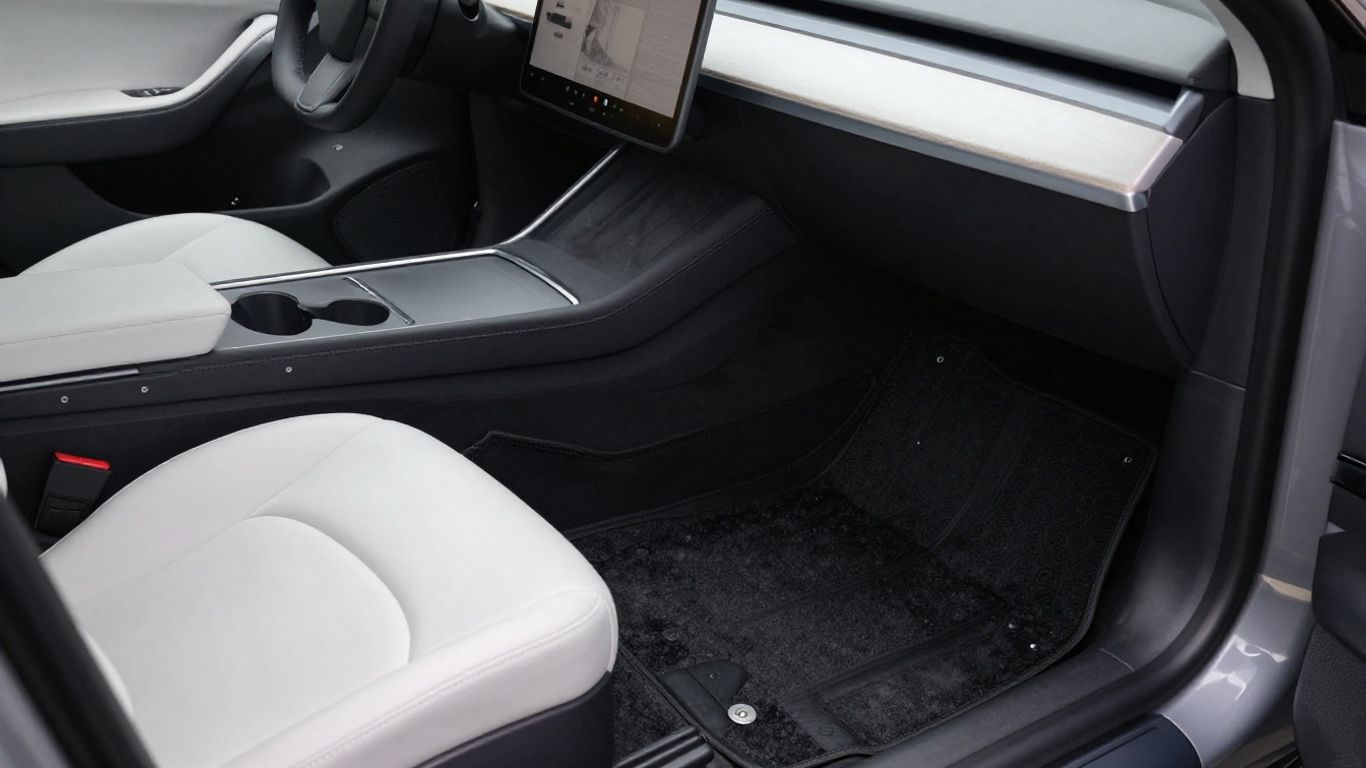
For a Model 3, check the front and rear floor shapes separately rather than assuming one generation fits another. Pay attention to the rear center area, the contour around the front seat bases, and whether the design leaves room for the factory attachment points.
A set may look close in a product photograph and still sit poorly at the corners. Measurements and a clear return policy are useful safeguards when the listing does not identify the exact configuration.
Model Y fitment considerations
Model Y shoppers should verify both the seating layout and the applicable refresh or model-year range. Rear-floor coverage can differ in vehicles with different seat arrangements, and cargo liners may be shaped for a particular trunk configuration.
A Model Y floor mat comparison can help organize the decision around fit, coverage, durability, and value. Treat comparisons as a starting point, then confirm the seller’s current fitment information.
Model S and Model X compatibility
Model S and Model X buyers should be especially careful with row count, second-row arrangements, and the shape of the footwells. A front set may fit while the rear or cargo pieces do not match the vehicle’s interior layout.
Look for an itemized description that identifies every included piece. If the set combines floor and cargo protection, confirm that each part is intended for your specific version rather than a loosely related model.
Checking model year, refresh, and interior variations
Before ordering, record the model, production or model year, seating layout, and any refresh designation shown in the listing. Compare the mat outline with your floor anchors and seat rails, especially when a product is offered for several generations.
This short check can prevent the most frustrating kind of accessory purchase: a set that is attractive, well made, and simply wrong for the car.
Compare materials, construction, and coverage
Material names are useful, but they do not tell the entire story. Thickness, flexibility, edge height, surface texture, and the way each piece is cut all affect how the mats behave in real use. Consider those details together instead of selecting by material label alone.
Thermoplastic rubber versus flexible TPE
Thermoplastic rubber and flexible TPE are broad material categories rather than guarantees of quality. The finished mat should resist cracking, remain manageable when removed, and tolerate ordinary washing without becoming misshapen.
Ask how the material feels at the edges and corners. Excessively rigid pieces may be difficult to install, while overly soft pieces can fold or curl where the floor changes direction.
Raised edges and spill containment
Raised edges create a shallow basin for rainwater, melted snow, and drink spills. Higher walls are helpful in wet climates, but they must follow the footwell closely; a tall edge that bows inward can reduce usable foot space.
The best design balances containment with easy removal. If emptying the mat requires wrestling it through the door, routine maintenance tends to happen less often.
Anti-slip backing and floor anchors
A backing should help the mat stay in place without damaging the carpet beneath it. Factory clips or anchors are useful when the mat is shaped to engage them correctly, but anchoring hardware is only helpful if it is aligned and fully secured.
Press around the perimeter after installation and test the mat with the seat in several positions. It should not creep toward the pedals or bunch beneath the seat.
One-piece, multi-piece, and extended coverage designs
The construction style changes both coverage and convenience. A one-piece liner may reduce gaps, while multi-piece sets can be easier to remove and replace. Extended designs may reach farther up the sides or beneath the rear seating area, but they can also take longer to position.
Use this comparison as a practical guide:
| Design choice | Main advantage | Potential trade-off |
|---|---|---|
| One-piece liner | Fewer seams and gaps | Bulkier to remove |
| Multi-piece set | Easier handling and replacement | More joints to clean |
| Extended coverage | Protects more carpet | Can require more careful fitting |
| Low-profile shape | Subtle appearance | Usually less spill capacity |
The right option depends on whether your priority is containment, handling, appearance, or the ability to replace one worn section. Check the actual included pieces before comparing prices.
Evaluate front, rear, and cargo-area protection
A complete interior-protection plan extends beyond the driver’s footwell. Passengers, child seats, pets, luggage, and grocery bags all create different patterns of wear. Review the whole vehicle so a well-protected front row does not hide exposed carpet elsewhere.
Front-row coverage for everyday driving
The front mats receive the most regular contact, so their contours and anchoring deserve close inspection. Look for coverage beneath the pedals without interference, protection beside the footrest, and edges that meet the surrounding carpet cleanly.
For daily commuting, easy removal may matter as much as maximum height. A mat that can be lifted, shaken out, and replaced in a minute is more likely to stay clean.
Rear mats for passengers and child seats
Rear mats should cover the footwells used by passengers and leave the seating hardware accessible. Families should check the area beneath and around child seats, where crumbs and moisture can collect unnoticed.
A broad rear piece can reduce the exposed strip between individual mats, but verify that it does not interfere with seat movement or the installation of approved restraint systems.
Trunk and frunk liner options
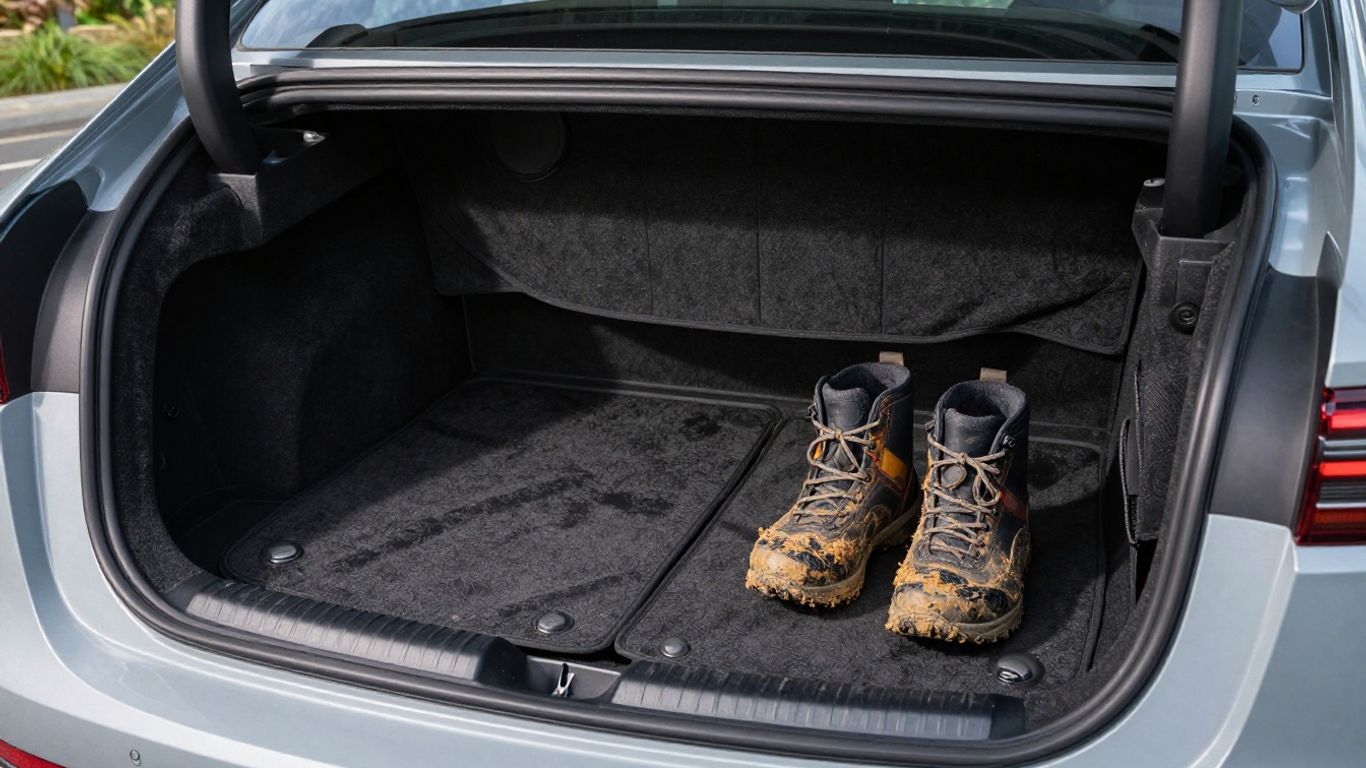
Cargo liners protect against leaks, dirt, and rough-edged items that would quickly mark carpet. Decide whether you need a trunk-only piece, a frunk liner, seat-back protection, or a set that covers several cargo surfaces.
A product described as all-weather floor liners may be relevant when you want a purpose-built liner rather than a loose mat, but confirm the exact vehicle fit and included areas before buying.
Coverage around seat rails and door sills
Edges near seat rails and door sills are easy to overlook. They collect grit because shoes and cargo cross those boundaries, yet excessive material in the same area can obstruct seat movement or catch on trim.
Inspect the mat with the seats fully forward and fully back. This simple test reveals whether the liner stays flat throughout the range you actually use.
Choose the right design for your driving needs
The ideal design reflects your routine more than a product photograph. A driver in a snowy region needs containment and easy drying, while a household with pets may care more about hair, claws, and cargo transitions. Appearance matters, but it should follow fit and safe operation.
Best features for snowy and wet climates
Prioritize raised sides, a surface that does not become dangerously slick when wet, and a material that remains flexible in cold conditions. A deep channel pattern can help hold loose water, though it should not make emptying the mat awkward.
If snow and road salt are routine, favor a set that can be rinsed frequently and dried without prolonged effort. Coverage beneath the rear passenger area is often just as valuable as deep front pockets.
Options for families, pets, and frequent cargo
Families may prefer broad rear coverage and surfaces that wipe clean after spills. Frequent cargo users should consider a trunk liner with edges that prevent liquids from reaching the side carpet. Pet owners need to think about the transition from the passenger area to the cargo space.
For dogs, a dog car seat cover can address a separate cargo-area need, particularly when a stable, wipe-clean surface is more useful than a simple hammock-style cover. Keep that accessory decision separate from the floor-mat fitment decision.
Low-profile mats for a factory-style appearance
Low-profile mats sit closer to the carpet and usually look less conspicuous. They can be a good match for a clean, restrained interior, particularly when your climate is mild and spills are uncommon.
The compromise is usually reduced wall height and less room for pooled water. Compare the edge profile in photographs and read how the mat handles the footrest, seat rails, and door-side contours.
Custom colors, logos, and textured finishes
Color and texture can make a practical accessory feel more integrated with the cabin. Darker surfaces may disguise dirt, while a subtle texture can provide traction without looking busy.
Treat decorative choices as secondary. A striking finish cannot correct a curled edge, weak anchor, or gap beside the door sill, and logos should never obscure the surface you need to inspect and clean.
Install and maintain Tesla all-weather floor mats
Even accurately shaped mats need a careful installation. Dirt beneath the liner can scratch or grind into the carpet, while a misaligned anchor can allow movement during driving. Set aside a few minutes for preparation instead of dropping the pieces in straight from the box.
Preparing the interior before installation
Remove the existing mats and vacuum the carpet, including the edges near the seat rails. Check for coins, stones, damp patches, and objects that could keep the new pieces from sitting flat.
If the mats arrived rolled or compressed, let them relax in a warm, shaded place according to the seller’s instructions. Do not force a curled edge into position.
Aligning mats with factory clips and anchors
Place each mat into the footwell with the seat positioned to give you a clear view. Align every clip or anchor before pressing the mat down, then run your hand around the perimeter to check for lifted corners.
Move the seat through its normal range and inspect the pedal area. The mat must remain clear of the controls and should not slide forward under pressure from your feet.
Removing dirt, water, and debris
Frequent light cleaning is easier than waiting for a thick layer of grit to build up. Lift the mat carefully so loose debris stays contained, then empty it away from the door opening and carpet.
A useful routine is:
- Shake or vacuum loose grit before rinsing.
- Wipe spills as soon as practical.
- Check beneath the mat for trapped moisture.
- Dry both sides before reinstalling.
This routine helps preserve the floor beneath the liner as well as the liner itself. It also makes it easier to spot a split edge or damaged anchor early.
Cleaning methods that protect the material
Use mild soap, water, and a soft or medium brush for ordinary cleaning. Avoid harsh solvents, abrasive pads, and treatments that leave an oily film, since residue can affect traction and attract more dust.
Rinse thoroughly and allow the mat to dry away from excessive heat. Follow the care directions supplied with the particular material, especially if the product includes a bonded backing or separate anchor hardware.
Compare value before buying
Price is only one part of the ownership cost. A less expensive set may be worthwhile if it fits well and has clear replacement support, while an expensive set may disappoint if its coverage is incomplete. Compare the details that affect daily use, not just the number printed beside the product.
How price reflects fit and construction
A higher price can reflect more precise molding, thicker construction, additional cargo pieces, or a more carefully finished edge. Those benefits matter when they solve a problem you actually have.
Make a simple side-by-side comparison of included pieces, coverage, anchor design, material, cleaning guidance, and return terms. The Tesla floor mats and cargo liners collection is one useful reference point for reviewing how floor and cargo protection are grouped together, though fitment still needs individual confirmation.
Warranty, returns, and replacement coverage
Read the warranty for exclusions, duration, and the process for reporting a defect. Return terms matter just as much when the mat technically fits but does not sit flat or leaves an unexpected gap.
Check whether individual pieces can be replaced. A replaceable driver’s mat may extend the useful life of the entire set and reduce waste after years of normal wear.
OEM and aftermarket purchasing considerations
OEM and aftermarket options can differ in styling, availability, coverage, and price. The important comparison is not the label alone but whether the chosen set meets your requirements for fit, containment, anchoring, and maintenance.
Buy from a listing that identifies the exact model and configuration. Avoid relying on vague promises such as “universal fit” when the footwell has shaped contours and fixed anchor locations.
Questions to ask before placing an order
Before checkout, ask the seller the questions that are easiest to overlook:
- Does the set fit my exact model year and refresh?
- Which rows and cargo areas are included?
- Do the anchors match the vehicle’s factory locations?
- Can I return the set if it does not lie flat?
- Are individual replacement pieces available?
Clear answers are a better sign than a long feature list. If the seller cannot explain fitment or coverage, keep comparing rather than hoping the photographs tell the whole story.
Conclusion
Choosing tesla all-weather floor mats becomes much simpler when you start with the vehicle configuration, then compare coverage, containment, material, anchoring, maintenance, and support. Select the set that suits your climate and routine, fits without interference, and remains practical to remove and clean.
Frequently Asked Questions
Do all-weather floor mats fit every Tesla model?
No. Fit can vary by model, model year, refresh, seating layout, and interior configuration, so confirm the exact vehicle details before ordering.
Are all-weather liners better than carpet mats?
They are generally better suited to frequent water, mud, snow, and spills, while carpet mats may offer a softer feel and a more understated appearance in dry conditions.
Should rear mats cover the center floor area?
Broad center coverage can reduce exposed carpet and simplify cleaning, but the piece must not interfere with seat movement, anchors, or child-restraint installation.
Do cargo liners protect the frunk too?
Not necessarily. Trunk and frunk pieces are often separate, so check the product description to see which cargo areas are included.
How often should floor mats be cleaned?
Clean them whenever dirt or moisture accumulates, and increase the frequency during snowy or rainy periods. Always check beneath the mat for trapped moisture.
Can floor mats interfere with pedals?
They can if they are incorrectly fitted, unsecured, curled, or stacked over another mat. Confirm that the driver’s mat is anchored and clear of all pedals before driving.
What should I prioritize when buying floor mats?
Start with exact fitment and safe anchoring, then compare edge height, coverage, material flexibility, cleaning requirements, warranty, returns, and replacement availability.