

Key Takeaways
The best Tesla dog seat covers fit the vehicle, suit the dog, and remain practical after muddy walks and daily use.
- Match the cover to the Tesla model and rear-seat layout.
- Choose hammock, bench, cargo, or front-seat coverage for the way your dog travels.
- Prioritize waterproofing, nonslip construction, anchors, and seat-belt access.
- Check cleaning, storage, warranty, and replacement considerations before buying.
- Use a proper harness and keep airbags, controls, and passengers unobstructed.
Understand why Tesla dog seat covers matter
A dog can turn a clean rear seat into a mixture of fur, grit, moisture, and claw marks surprisingly quickly. A cover creates a removable layer between that everyday mess and the upholstery. The right one should also make your dog feel settled rather than sliding around whenever the car slows or turns.
Protect upholstery from fur, dirt, and scratches
Fur gathers in seams, while dirt carried in on paws can work into fabric and trim. A cover with broad seat, door, and lower-footwell coverage catches more of that debris than a thin pad placed only across the cushion. Consider the places your dog actually touches, especially the door panels if they like to look outside.
A firm base can also be useful for dogs that dislike a loose sheet beneath them. The design described in this hard-bottom dog car seat cover comparison illustrates why a flat platform may feel more stable than a sagging hammock, although fit still needs to be checked against your vehicle.
Reduce mess after wet or muddy walks
Water resistance matters most when it is paired with coverage around the edges. Muddy paws often leave marks on the seatback and doors, not just the seating surface. Look for raised or extended sections that can be wiped before the mess reaches the cabin.
A cover should be easy to remove before the dirt dries into it. If installation takes several awkward steps, you may leave it in place longer than you want, so quick-release clips, simple straps, and a manageable folded size are worthwhile practical details.
Improve comfort and stability for your dog
Comfort is more than adding padding. Dogs need a surface that does not bunch under their feet and enough room to change position without stepping onto exposed upholstery. Quilting can soften the ride, but a nonslip underside and well-placed anchors do more to stop the cover moving beneath the dog.
Think about your dog’s size, coat, and travel habits. A small dog may appreciate a contained bench area, while a larger dog may need a flat cargo surface with room to turn around. The cover should support a calm posture without restricting the harness.
Support safer, more organized car travel
A seat cover is not a restraint, so it should be used alongside a properly fitted harness and an appropriate seat-belt attachment. Keeping the dog in one defined area also reduces distractions for the driver and makes it easier to keep bags, leads, and towels arranged elsewhere.
Safety starts with fit, not with the number of features on the packaging. Check that anchors stay secure, openings line up with the seat belts, and no loose flap can interfere with doors or controls.
Match the cover to your Tesla model
Different Tesla models have different rear-seat proportions, door shapes, folding arrangements, and cargo layouts. Even a cover advertised for several models may fit one more neatly than another. Before shopping, treat the vehicle’s actual interior measurements as more useful than a generic size label.
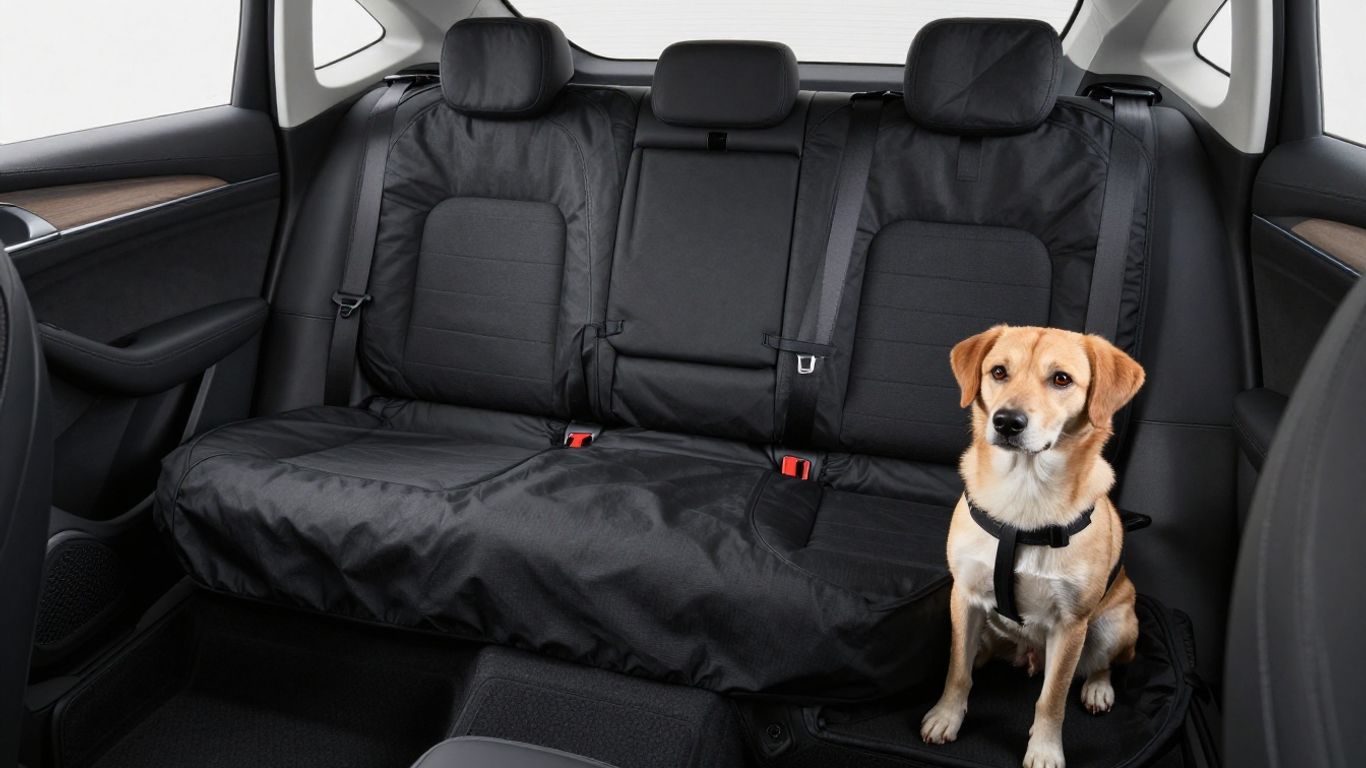
Compare fit requirements for Model 3 and Model Y
Model 3 and Model Y owners should compare the rear bench width, seatback angle, door coverage, and available legroom rather than assuming one pattern will sit identically in both vehicles. The Model Y’s taller, more flexible cabin may suit a different balance of bench and cargo coverage than the lower sedan layout.
Pay attention to how the cover reaches the outside edges of the cushion. Gaps at the doors are common places for fur and drool to collect, especially when a dog braces against the window during a drive.
Check compatibility with Model S and Model X
For Model S and Model X, check the seller’s exact compatibility wording and then compare it with the interior you have. Rear-seat width, door shape, seat configuration, and cargo access can affect whether straps sit in the intended places.
A useful comparison is the published Tesla rear-seat cover range, which discusses coverage for Model 3, Model Y, Model S, and Model X. Treat any listing as a starting point, then verify dimensions and seat functions before ordering.
Measure the rear bench, doors, and floor area
Measure the usable cushion from side to side, the seatback from its top edge to the cushion, and the floor area where your dog’s feet will land. Add the door panels and the gap behind the front seats to your notes if the cover is intended to protect those areas too.
Write the measurements down in one place before comparing products. A simple table can prevent a common mistake: choosing a cover based on vehicle name alone while overlooking the actual area that needs protection.
| Area to measure | What to record | Why it matters |
|---|---|---|
| Rear cushion | Width and depth | Confirms bench coverage |
| Seatback | Height and split points | Helps straps and folding sections align |
| Door-facing edges | Height and reach | Reduces exposed trim and gaps |
| Footwell or cargo floor | Length and width | Ensures paws stay on the protected surface |
After measuring, compare each dimension with the cover’s finished size, not merely the packaging size. Leave room for seat belts, door movement, and normal folds rather than stretching the material tightly across every surface.
Account for split-folding seats and center armrests
Split-folding seats need a cover that can move with one section without trapping the other. Center armrests may also require a zip opening, separate flap, or a design that leaves the armrest available to passengers.
Decide whether you regularly carry people in the back. If so, a full hammock may be inconvenient, while a divided bench cover could protect the dog’s side and still let a passenger use the other seat.
Choose the right dog seat cover design
The best shape depends on where your dog rides and how often the car has human passengers. A rear-seat hammock protects more surrounding surfaces, while a bench cover can be less intrusive. Cargo and front-passenger solutions make sense for different dogs and different travel routines.
Hammock covers for rear-seat protection
A hammock connects the front and rear headrests, creating a barrier across the footwell and helping stop a dog from moving into the front area. It is useful for dogs that stand, turn, or shift position during travel, provided the front seats and restraint setup remain unobstructed.
The trade-off is reduced rear-seat access for people. Check whether the hammock has openings for all required seat belts and whether the front straps can be adjusted without rubbing against the seats.
Bench covers for passengers and shared seating
A bench cover lies across the rear cushion and seatback without closing off the entire rear footwell. It is often the more flexible choice when one passenger and one dog share the back seat, or when you want to remove only part of the protection between trips.
Look for split sections, seat-belt openings, and enough side coverage to protect the areas your dog touches. The Tesery seat-cover review is one example of the kind of construction details shoppers may encounter, including quilting and water-resistant fabric; verify current specifications before relying on any listing.
Cargo-area covers for larger dogs and SUVs
A cargo cover suits a larger dog that needs more room to stand and turn, particularly when the rear seats are folded. Measure the floor, side walls, tailgate threshold, and seatback before choosing one. A flat, nonslip surface is especially useful when the cargo area is longer than a standard bench.
Check how the cover handles loading and unloading. A protected bumper flap can help with muddy paws, while side panels reduce the chance of claws or dirt reaching the trim.
Front passenger seat covers for smaller pets
A small dog may travel on the front passenger side only when that arrangement is safe and appropriate for the vehicle and restraint being used. The cover should not interfere with airbags, seat controls, or the driver’s visibility.
For this layout, a compact design with a floor extension can protect more than a cushion-only pad. The front passenger pet cover page shows the type of product intended for seat, floor, and small-item protection, but installation instructions and vehicle-specific safety guidance should always take priority.
Evaluate materials and construction
Material descriptions can sound similar, so inspect what each layer actually does. Waterproofing protects against spills, padding improves comfort, and anchors keep the cover in place; none of those features replaces the others. Seams, corners, zippers, and attachment points often reveal more about long-term use than the surface fabric alone.
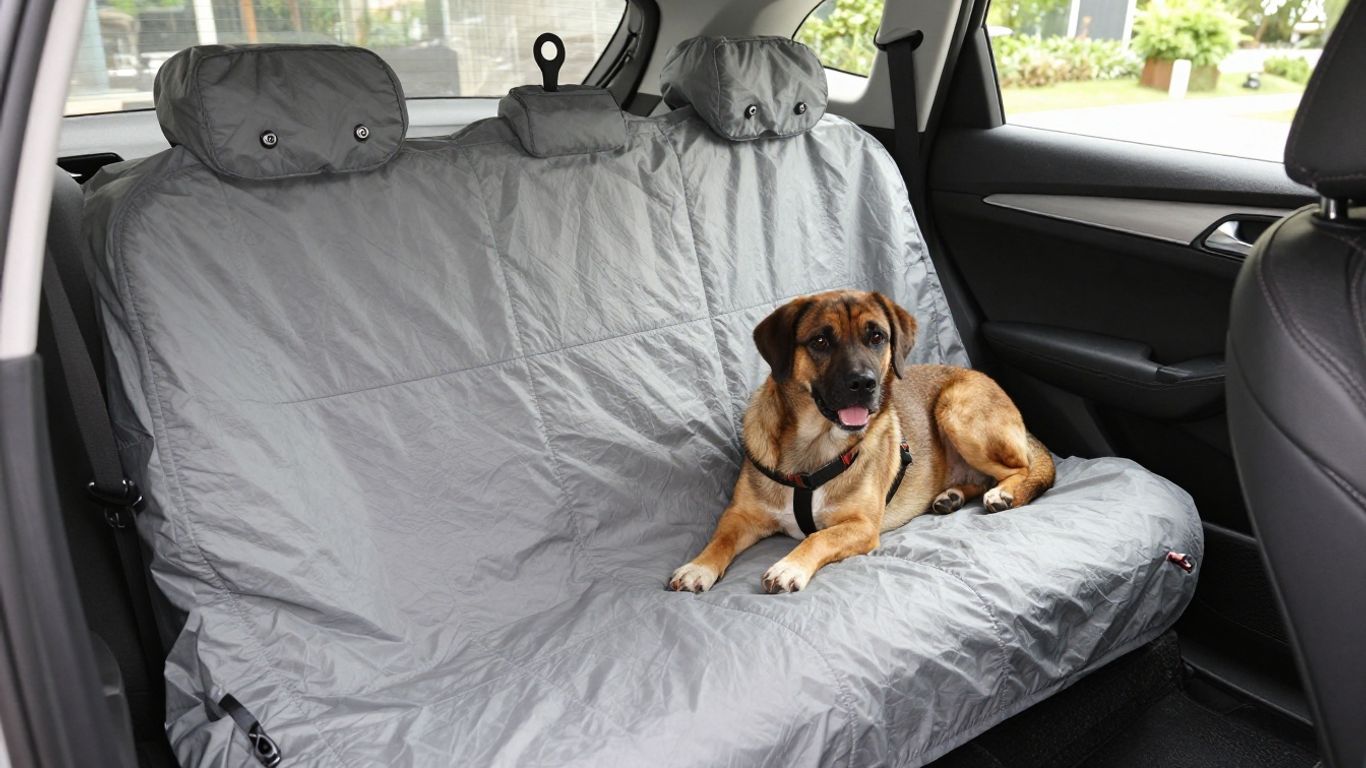
Waterproof layers for spills and accidents
A waterproof seat base is helpful for wet paws, drool, and accidents, but check whether the seams are also sealed. Some covers resist liquid across the main panel while allowing seepage through stitching or joins.
Consider the likely mess rather than buying for a label alone. If your dog returns from beaches, parks, or rainy walks, an extended waterproof footwell and washable surface may be more useful than a thicker cushion with limited edge coverage.
Nonslip backing and seat anchors
A nonslip backing reduces sliding, while seat anchors tuck into the seat crease and provide a second point of control. Together, they help the cover remain flat when a dog stands up or changes position.
Inspect the anchor shape and strap adjustment. Anchors should be secure without forcing material deep into the seat, and straps should not sit where they could affect folding, buckling, or access to a passenger seat belt.
Quilted padding for comfort and durability
Quilting can give a dog a softer surface and distribute wear across the panel. It also makes the cover less likely to feel like a thin sheet, which may help some dogs settle during longer drives.
Too much padding, however, can make folding and washing difficult. Choose a construction that is comfortable enough for regular trips but still practical to remove, dry, and store.
Scratch-resistant surfaces and reinforced seams
Dogs place the most stress on corners, seams, entry flaps, and the area beneath their paws. Reinforced stitching and a surface that resists claw marks can extend the useful life of the cover, especially when the dog climbs in and out frequently.
Run your hand over the edge binding and inspect attachment points before installing. A smooth finish is preferable where the cover touches trim, while strong webbing matters more at the straps than decorative stitching does.
Prioritize safety and everyday usability
A cover should make travel easier without creating a new hazard. Restraints, airbags, seat belts, doors, and driver visibility all take priority over complete upholstery coverage. If a design cannot be installed without blocking one of those systems, it is the wrong design for that trip.
Use a properly fitted dog harness and seat belt
Use a harness designed for vehicle travel and attach it according to the manufacturer’s instructions. Avoid clipping a restraint directly to a collar, and make sure the lead is not so long that the dog can reach the driver or become tangled.
The cover should include access points that let the restraint connect without forcing the belt across a loose flap. Check the setup while the dog is calm, then test that the cover stays flat as the dog moves.
Keep airbags and door controls unobstructed
Never cover or press against an airbag location, door handle, window control, or seat adjustment mechanism. Front-seat pet arrangements need particular care because the passenger seat and dashboard may contain safety equipment that a cover cannot block.
The safest-looking installation is not necessarily the safest one if it changes how the restraint or airbag works. Follow the vehicle and harness instructions, and remove the cover if it cannot sit clear of those systems.
Look for openings for human seat belts
Seat-belt openings allow people to use the rear seats without removing the entire cover. They also help keep belts routed cleanly rather than trapped underneath a layer of fabric.
Before buying, count the openings and compare their positions with your bench. A cover that advertises belt access but places the slots too far from the buckles may still be awkward in everyday use.
Choose designs that are easy to install and remove
A cover that takes seconds to clip in is more likely to be used consistently. Look for clear attachment points, adjustable straps, seat anchors that do not require excessive force, and a shape that folds without becoming a tangled bundle.
Keep a small travel kit with a towel, waste bags, and a spare lead. The Tesla pet-accessory collection is a useful reminder that travel comfort and protection often work together, though the cover itself still needs to be judged by fit and safety.
Compare cleaning, storage, and long-term value
The cheapest cover is not always the least expensive over time. Frequent washing, damaged straps, shrinking fabric, and difficult storage can turn a low purchase price into repeated replacement. Think about the cleaning routine you will actually follow after an ordinary walk.
Machine-washable fabrics and removable liners
Machine-washable fabric can save time, but confirm the washing instructions, drying method, and whether the cover fits your machine. A removable liner may be easier to clean than a heavily padded one-piece design.
A hose-down surface is convenient for mud, while machine washing is better for fur and lingering smells. Either way, let the cover dry fully before reinstalling it so dampness does not remain against the upholstery.
Hair-resistant surfaces that simplify cleanup
Smooth or tightly woven surfaces usually release hair more readily than deep, loose quilting. A handheld vacuum, rubber brush, or lint tool can help, but the cover should not require a long cleaning session after every short trip.
Choose a finish that suits your dog’s coat. Short, stiff hairs may cling differently from long fur, so a sample or return policy can be valuable when the material description is vague.
Foldable designs for convenient storage
A cover that folds into a compact shape can stay in the car without taking over the cargo area. This matters when you switch between dog trips, shopping, passengers, and larger loads during the same week.
Check whether straps fold inward and whether wet fabric can be carried safely until it dries. A separate storage bag is helpful, but the folded dimensions matter more than the bag itself.
Balance price, warranty, and replacement costs
Compare the initial price with the parts most likely to wear out: straps, buckles, zippers, and edge binding. Read warranty exclusions carefully, particularly around claw damage, washing, and normal wear.
For broader shopping research, a TripAdvisor promotions guide illustrates why it is sensible to inspect offers and conditions rather than relying on a headline discount. The same habit applies here: compare the delivered cost, return terms, warranty, and likely replacement cycle.
You can also keep a simple buying checklist:
- Confirm the exact Tesla model and interior layout.
- Measure the seat, doors, footwell, or cargo area.
- Check restraint access and airbag clearance.
- Review washing instructions and warranty limits.
That short process usually narrows the choice more effectively than comparing surface colors or decorative patterns. A cover that fits, cleans easily, and works with the dog’s restraint is more valuable than one with a longer feature list.
Conclusion
Choosing among Tesla dog seat covers becomes simpler when you start with the dog’s travel position, measure the interior, and then compare coverage, restraint access, materials, cleaning, and storage. The best option is the one that protects the areas your dog actually uses while keeping passengers, controls, and safety equipment clear.
Frequently Asked Questions
What size dog seat cover do I need?
Measure the seat or cargo area first, then compare those dimensions with the cover’s finished measurements. Account for door flaps, footwell extensions, and seatback height rather than relying only on a vehicle label.
Is a hammock or bench cover better for a dog?
A hammock generally offers more rear-seat and footwell coverage, while a bench cover is easier to share with passengers. Choose according to your dog’s movement, restraint setup, and need for human seating.
Are waterproof dog seat covers completely leakproof?
Not always. The main panel may resist water while seams, zippers, or joins allow some seepage, so inspect the construction and follow the care instructions before assuming complete protection.
Can a dog seat cover be used with a seat belt?
Yes, when the cover has suitable openings and the dog uses a properly fitted vehicle harness. Confirm that the belt and restraint connect correctly and that the cover cannot interfere with their operation.
How often should a dog seat cover be washed?
Wash it whenever dirt, moisture, or odor builds up, and clean it more often after muddy or wet outings. Regular vacuuming or brushing can reduce the need for full washing between trips.
Should a dog ride in the front passenger seat?
Only if the arrangement is compatible with the vehicle’s safety systems and the dog is properly restrained. Airbags, controls, driver visibility, and the dog’s ability to remain secure all need careful consideration.
What features matter most for long-term use?
Prioritize a secure fit, nonslip backing, strong anchors, durable seams, practical washing instructions, and easy storage. A clear warranty and reasonable replacement costs also matter when the cover will be used frequently.