

Key Takeaways
The right cargo mat depends on the areas you need to protect and how you use them. Check the fit carefully, then compare materials and coverage before choosing.
- Decide whether you need a rear trunk mat or broader cargo-area coverage.
- Confirm the mat matches your vehicle’s year, seating configuration, and trunk layout.
- Compare material, edge height, and ease of cleaning against the cargo you carry.
- Check seat-back coverage and access to storage before settling on a design.
- Review fitment details, return terms, and what is included in the price.
Understand what Tesla Model Y luggage mats cover
Cargo mats can cover just the trunk floor or extend to other areas that see wear from bags, spills, and everyday loading. For Tesla Model Y luggage mats, the product description matters as much as the vehicle name: sets sold under similar labels may include different pieces. Start by listing the areas you want to protect, then compare that list with the pieces shown and described.
Rear trunk mats versus full cargo-area sets
A rear trunk mat typically protects the main cargo floor, while a broader set may include additional pieces for areas such as the backs of the rear seats or side compartments. Neither choice is automatically better; it depends on what you load and how much coverage you want to manage. Read the included-items list carefully, since a photograph may show several pieces even when a listing offers different configurations.
A listing for a rear trunk mat, for example, is a useful reminder to distinguish a single mat from a multi-piece set. Look for a clear inventory of what comes in the package rather than assuming that every visible section is included. If you regularly fold the seats or carry objects that press against their backs, check whether those surfaces are covered too.
Underfloor storage and side-compartment coverage
The trunk floor is only part of the cargo area. Some vehicles have storage spaces beneath the floor, and side wells can also collect dirt or small spills; check whether the mat leaves those areas accessible or covers them with separate pieces. A mat that lies over a storage hatch should not make ordinary access awkward.
Coverage details are easiest to compare when you name each surface separately: floor, side wells, seat backs, and underfloor access. A two-piece set may protect different locations than a single-piece mat, so match the parts listed to the spaces you actually use. Avoid relying on broad phrases such as “full coverage” without a diagram or itemized description.
How luggage mats differ from cabin floor mats
Luggage mats protect the cargo area, not the footwells where occupants place their shoes. Cabin floor mats are shaped for those separate areas, with their own fit and retention considerations. A cargo set may include several trunk pieces, but that does not mean it covers the passenger cabin.
Keep the two categories distinct when comparing prices or coverage claims. If you want protection in both areas, confirm that the package explicitly includes both cargo and cabin mats. That small check can prevent buying a set that solves only half the problem.
Check fit and vehicle compatibility
A mat can look close to the right shape and still be a poor fit if it was made for a different vehicle configuration. Check model year, seating layout, and any stated fitment exclusions before ordering. Even when listings use the same vehicle name, their fitment notes may point to different cargo-area shapes.
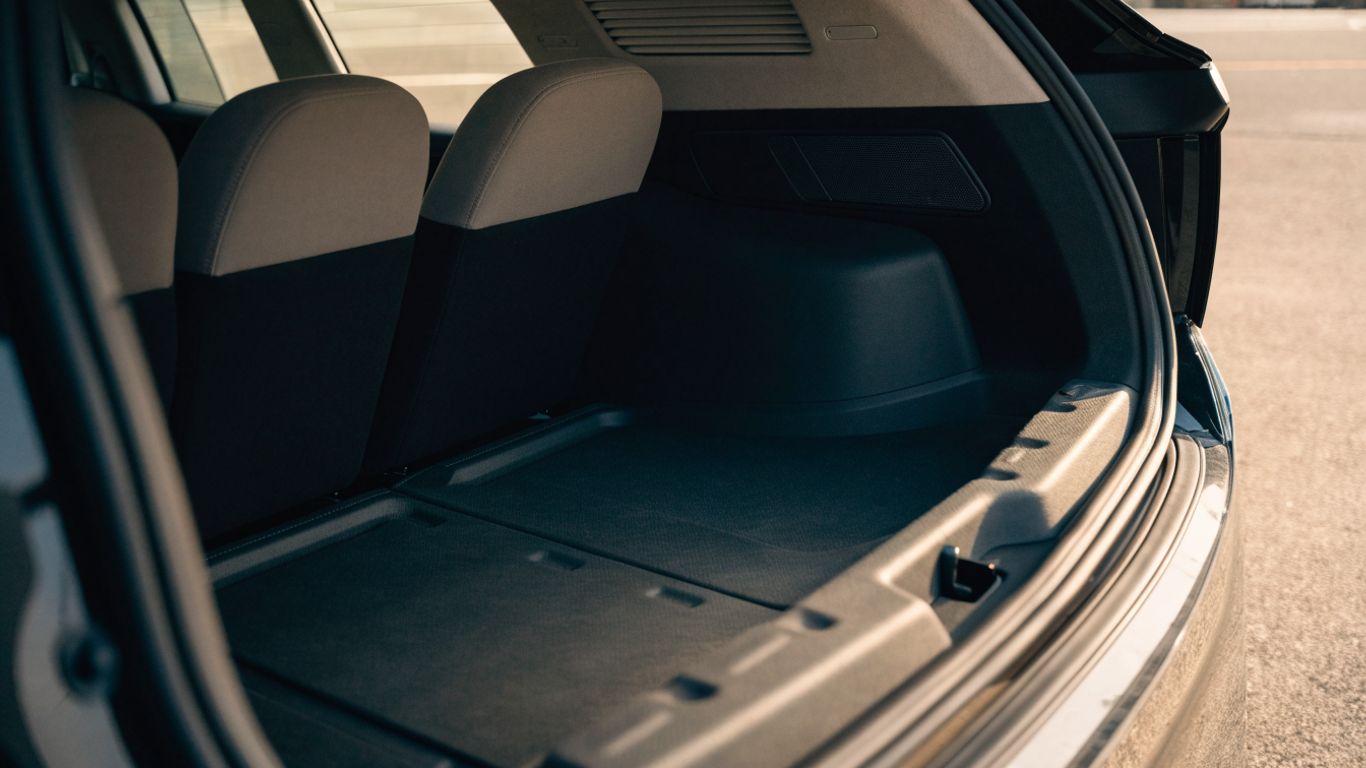
Confirm your Model Y’s model year and configuration
Start with the model year and seating configuration specified in the listing, then compare them with your vehicle details. Check for exclusions as well as the advertised fit: a listing may describe a specific range of years or configurations rather than every vehicle carrying the same model name. If you are unsure, ask the seller to confirm fitment against the vehicle details before purchase.
Fitment should be specific enough to answer your question, not just repeat a broad model name. When available, use the product’s fitment chart, included-piece list, and installation photos together. Each offers a different clue about whether the mat matches your cargo space.
Compare mats designed for specific trunk layouts
Trunk layouts can vary, so look for photos or diagrams that show how a mat sits around the floor, side wells, and storage access. A set intended for a particular layout may use more than one piece or a fold to follow the cargo area. One web listing, for example, describes a five-seat cargo mat set for specified model years and identifies the areas it covers; details like these are more useful than a generic fit label.
Compare the shape shown in the listing with the vehicle’s cargo area, especially around corners and openings. Product photos can be helpful, but confirm that they depict the exact version you are buying. If the listing offers multiple variants, check that the selected option—not merely the overall product page—matches your configuration.
Look for coverage around seat backs and cargo edges
Seat backs and cargo edges often take scuffs when items shift or slide during loading. If those surfaces matter to you, check whether the mat includes separate panels and how they attach. Also look for any openings or folds needed to retain access to seat-related hardware or storage areas.
A well-shaped mat should sit without obstructing ordinary use of the cargo area. The important question is not whether the product claims broad coverage, but whether the pictured edges and panels line up with the surfaces you want protected. Check for notes about folding, fastening, or repositioning before deciding.
Compare materials and construction
Material affects how a mat feels, how it handles routine mess, and how you clean it. Product labels can be broad, so compare the stated material and care instructions rather than relying on a name alone. The best choice is the one whose upkeep and surface suit the cargo you actually carry.
Rubber and TPE for water-resistant protection
Rubber and thermoplastic elastomer (TPE) mats are commonly chosen when easy cleanup and resistance to moisture are priorities. Check the listing for its specific care guidance and construction details; materials can vary, and a general label is not a guarantee of identical performance. A TPE mat listing is one example of the kind of material and layer information worth checking before you buy.
A textured surface may also be worth considering if bags or gear tend to shift, but look for an explicit description rather than guessing from a photo. Think about where water or dirt will go when you lift the mat to clean it. A practical mat should be manageable to remove and return to place.
Carpeted mats for a softer cargo surface
Carpeted surfaces can feel softer and may suit owners who prefer a fabric-like finish for luggage or everyday bags. Their cleaning needs can differ from those of a smooth, wipeable surface, so read the care directions and consider what you tend to transport. Fine dirt, pet hair, and damp items may call for more frequent attention.
Some products combine a softer upper surface with another layer beneath it, while others use a single material throughout. Confirm the construction from the product description, including whether any layer is removable. A clear description helps you judge both convenience and the amount of upkeep involved.
Raised edges and reinforced sections for added containment
Raised edges may help keep loose dirt or small spills from spreading beyond the mat, while reinforced areas may be intended for spots that receive more wear. Those details are only useful if they match your needs and do not interfere with loading. Check how high the sides sit and whether the shape leaves storage access unobstructed.
A compact comparison can make the trade-offs easier to see. Treat the table as a prompt for checking specifications, not as a claim that every mat in a material category is made the same way.
| Construction detail | What to check | May suit |
|---|---|---|
| Smooth rubber or TPE | Care directions and edge shape | Frequent wipe-downs |
| Carpeted surface | Cleaning method and texture | A softer cargo feel |
| Raised perimeter | Height and fit around corners | Loose dirt or minor spills |
| Reinforced sections | Location and construction details | Repeated loading in high-wear spots |
After comparing these details, return to the product’s own fitment and care notes. A useful feature on paper is less useful if it makes the mat harder to handle or leaves an important part of the cargo area exposed.
Choose features for your everyday cargo
The right coverage depends on what rides in the trunk most often, not on the longest feature list. Groceries, luggage, pets, and outdoor equipment can leave different kinds of mess and wear. Start with your usual routine, then decide whether extra panels or a more basic mat make sense.
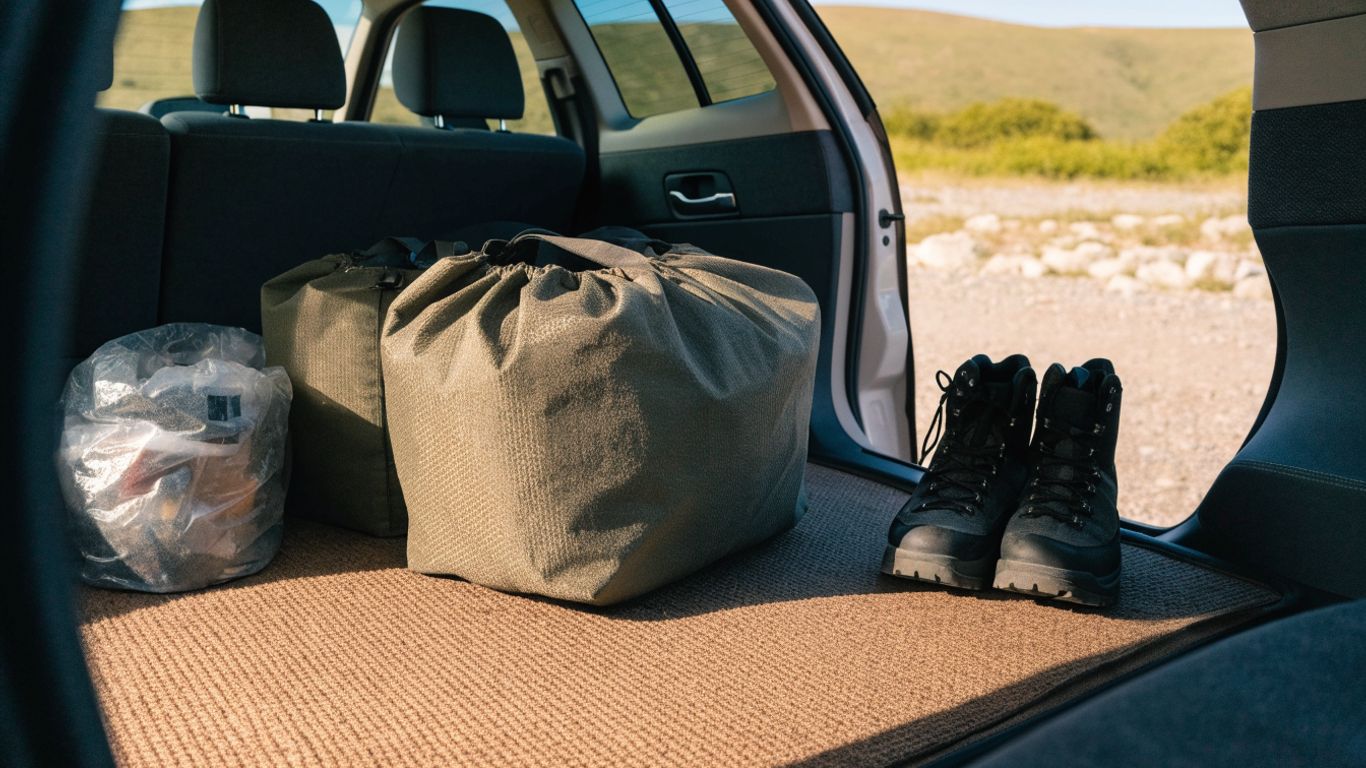
Match coverage to groceries, luggage, pets, or outdoor gear
Groceries may call for a surface that is straightforward to wipe, while muddy outdoor gear may make broader coverage more appealing. Luggage can scuff seat backs when the rear seats are folded, and pet-related cleanup may call for a material you can remove and clean without much fuss. Consider your most common cargo first, then account for occasional messes.
A short routine-based check can help keep the choice practical:
- Note what you carry most weeks, not just on one unusual trip.
- Identify which surfaces take the most contact or collect dirt.
- Consider whether moisture, grit, hair, or scuffs are your main concern.
- Decide how much removal and cleaning you are willing to do.
Use those answers to choose coverage and construction together. More pieces may protect more surfaces, but they can also mean more parts to position and clean.
Consider a split-folding rear-seat design
If you often fold one part of the rear seat while keeping another upright, check whether the mat’s seat-back coverage works with that arrangement. A split design may allow one section to move independently, but the product listing should explain how its panels are divided and positioned. Do not assume that a center seam means each side can be handled separately.
Look for photos of the mat with the seats in more than one position, or ask the seller how it behaves when the seats fold. The goal is to protect the areas you use without having to remove the whole set each time. Clear instructions are especially helpful if the panels connect or overlap.
Decide whether removable or layered mats suit your needs
Removable pieces can make cleaning easier, while a layered design may offer more than one surface to manage. Check whether layers separate, how they stay in place, and what the care instructions say for each part. A fixed single-piece mat may be simpler if you prefer fewer components.
Think through a normal cleanup: can you lift the mat without awkward bending, shake off debris outdoors, or wipe the surface where it sits? The simplest option is often the one you will actually maintain. A feature that sounds convenient should make a real step in your routine easier.
Install and care for your luggage mats
A careful first fitting helps you see whether a mat sits as intended and leaves important areas accessible. Before installing, clear the cargo area and read the product’s directions. Make any adjustments before loading bags or gear on top of it.
Prepare the cargo area before fitting a mat
Remove loose objects and debris so they do not get trapped underneath. Check the cargo floor and storage areas, then unfold or arrange the mat according to its instructions. If the design has several pieces, identify where each belongs before pressing or fastening anything into place.
Once positioned, look around the perimeter and at any access points. The mat should not obstruct ordinary opening or folding functions. If its shape seems wrong or a section lifts unexpectedly, pause and recheck the fitment information rather than forcing it into place.
Remove and clean mats according to their material
Care depends on the material and construction, so follow the manufacturer’s stated cleaning method. A smooth surface may be suited to wiping or rinsing if the instructions permit; carpeted or layered pieces may need a different approach. Avoid assuming that every mat can be treated the same way.
Set aside enough space to clean and dry removable pieces before returning them to the vehicle. If a mat has layers, check whether they should be separated for cleaning or left together. These small steps can help prevent dirt from being left beneath a mat after routine cleanup.
Check placement after folding seats or loading bulky items
Folding seats and shifting bulky cargo can tug at panels or move the mat out of alignment. After changing the seat position, glance over the edges and any connecting sections to make sure they remain where intended. Check again after carrying awkward items that may catch on a corner.
That quick check is especially useful when a set covers both the floor and the seat backs. If a panel has shifted, reposition it before the next load goes in. Consistent placement makes it easier to notice when a piece is not sitting correctly.
Evaluate options before you buy
Shopping is easier when you compare the same details across each product rather than getting pulled along by photographs or a low headline price. Write down the areas included, material, fitment, and care instructions for each option. Then weigh those details against the way you use the cargo space.
Compare full-set coverage with individual mats
A full set may cover more surfaces, while an individual mat may be enough if you mainly want to protect the trunk floor. Compare the exact contents, including whether the package includes seat-back or side pieces. A two-piece listing for rear cargo and frunk mats, for instance, illustrates why the included areas should be checked rather than inferred from a product title.
The right comparison is about coverage you will use, not the largest number of pieces. If you are unlikely to need added panels, a simpler option may be easier to handle. If you regularly carry items that touch other surfaces, broader coverage could be worth considering.
Review fitment details, return policies, and warranties
Before buying, confirm the year and configuration listed, and look for a return policy that explains what happens if the mat does not fit as expected. Review warranty terms separately; coverage, exclusions, and claim requirements can vary. Save the listing details so you can check the selected version against what arrives.
Comparing terms is a useful habit in other purchasing decisions too: readers weighing AB Spectrum, Design Concepts, or LiquorStoreOS can also benefit from checking scope before cost. For a more general approach to evaluating services, a consulting selection checklist lays out questions about fit and terms; managing Gmail inbox workflows is another example of choosing tools around a real routine. These are different kinds of purchases, but the practical habit is the same: understand what is included before deciding.
Balance price against materials and included coverage
Compare the total package rather than the price in isolation. A lower-cost mat may cover fewer areas, while a more elaborate set may include pieces you do not need. Factor in construction, cleaning effort, stated fitment, and the coverage that matters for your cargo.
Make a final check against your own priorities: fit first, then the surfaces covered, then material and upkeep. If two options appear close, the clearer product description and more suitable return terms can help break the tie. The aim is a mat that fits your vehicle and your habits without paying for unnecessary complexity.
Conclusion
Choosing cargo protection comes down to fit, coverage, material, and the way you use the trunk. Check the exact pieces included, make sure they match your vehicle configuration, and consider how easily you can clean and reposition them. A little time spent comparing details can make the final choice feel much more straightforward.
Frequently Asked Questions
What should I check first when choosing a cargo mat?
Start with vehicle fitment, including model year and configuration. Then confirm which cargo surfaces the mat actually covers and what pieces are included.
Is a trunk mat the same as a full cargo-area set?
Not necessarily. A trunk mat may cover the main floor, while a broader set can include additional sections such as side areas or seat backs. Check the itemized description.
Are rubber or TPE mats easier to clean?
They are often selected for straightforward cleanup, but care instructions depend on the specific product. Check the maker’s directions before wiping, rinsing, or using a cleaner.
Are carpeted cargo mats a good choice?
They can suit people who prefer a softer surface, but cleaning needs may differ from those of a smooth mat. Consider the kinds of dirt and cargo you handle most often.
Do raised edges matter on a cargo mat?
Raised edges may help contain loose dirt or minor spills on the mat. Check their shape and height, and make sure they do not interfere with access or loading.
Can I leave a cargo mat in place when folding the rear seats?
That depends on the mat’s design and the seat-back coverage. Look for product instructions or images showing how the panels work with the seats in different positions.
How often should I clean a luggage mat?
Clean it as needed based on the cargo and mess it encounters, following the product’s care instructions. Checking beneath it during cleanup can also help catch trapped debris.